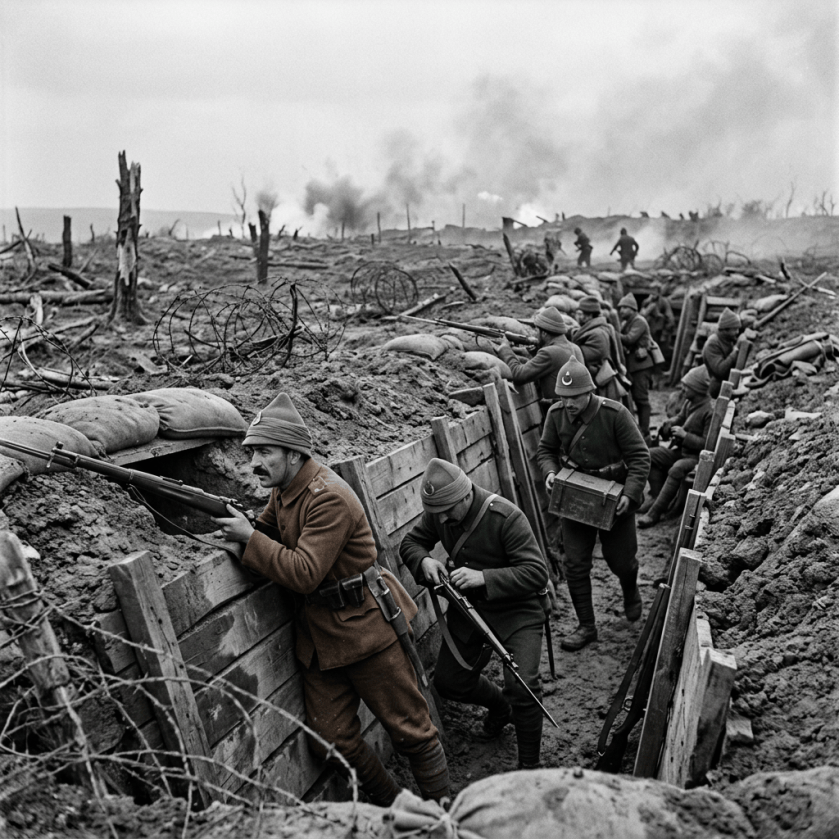
Summary — “The Collapse of an Empire: How the Great War Defeated the Ottoman Empire” (21 slides)
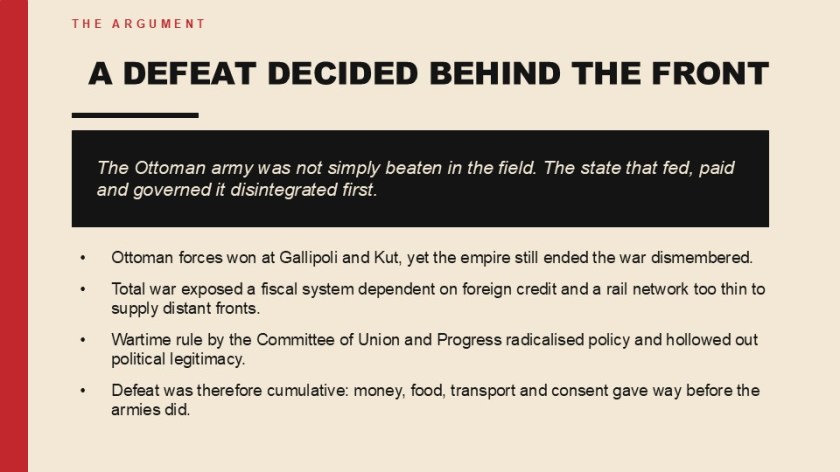
Core argument: The Ottoman Empire wasn’t beaten primarily on the battlefield — it won at Gallipoli and Kut — but the state that fed, paid and governed its armies collapsed first. Defeat was cumulative: money, food, transport and consent gave way before the troops did.
How it unfolds, in four parts:
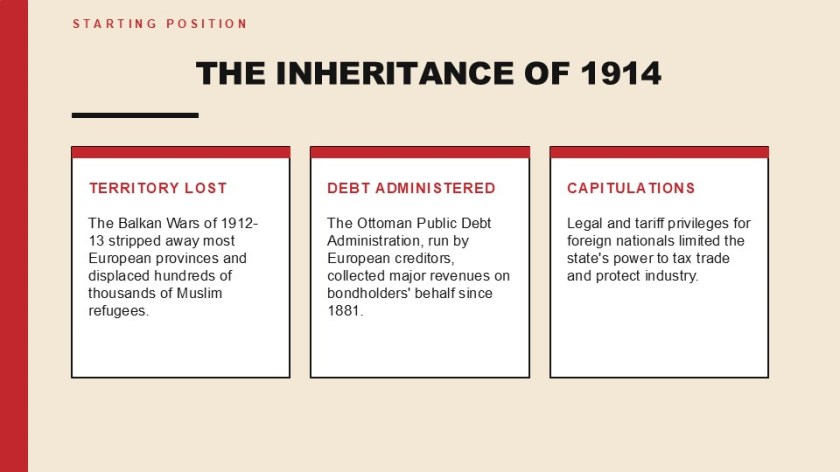
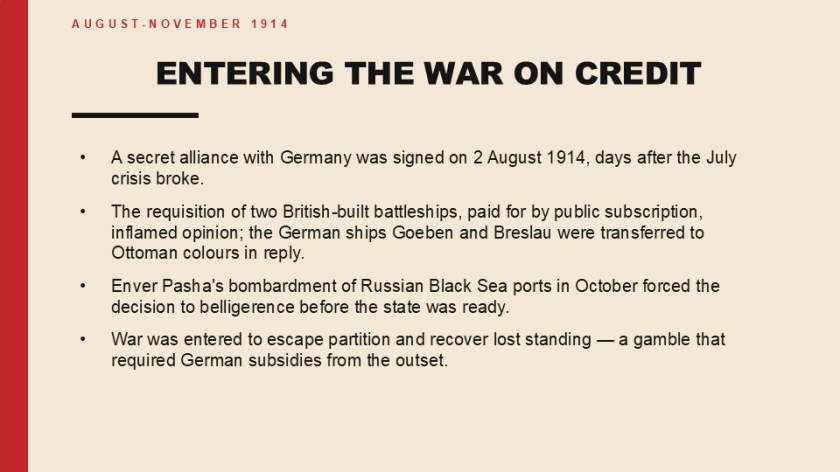
- The state that went to war (slides 3–5) — The empire entered 1914 already contracting after the Balkan Wars, with revenues controlled by the European-run Public Debt Administration and taxation constrained by the capitulations. The secret German alliance of August 1914 and Enver Pasha’s Black Sea bombardment forced belligerence before the state was ready, dependent on German subsidies from day one.
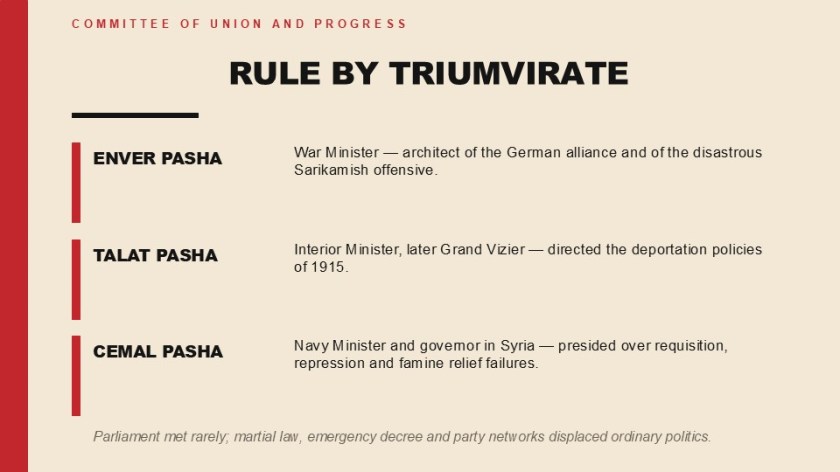
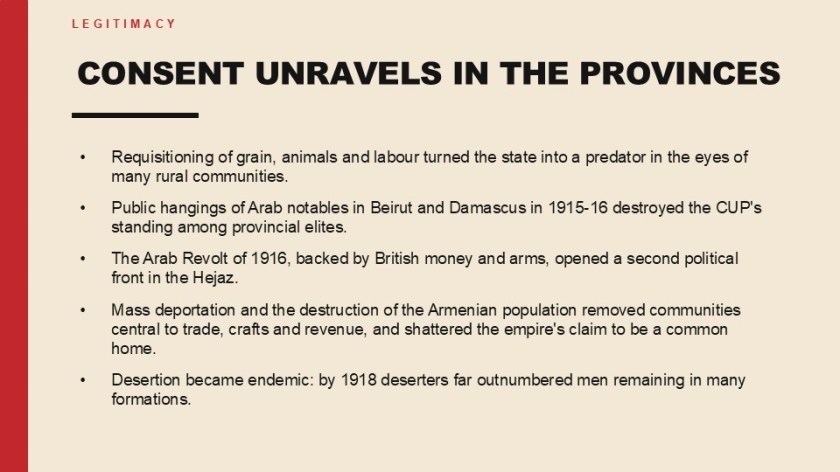
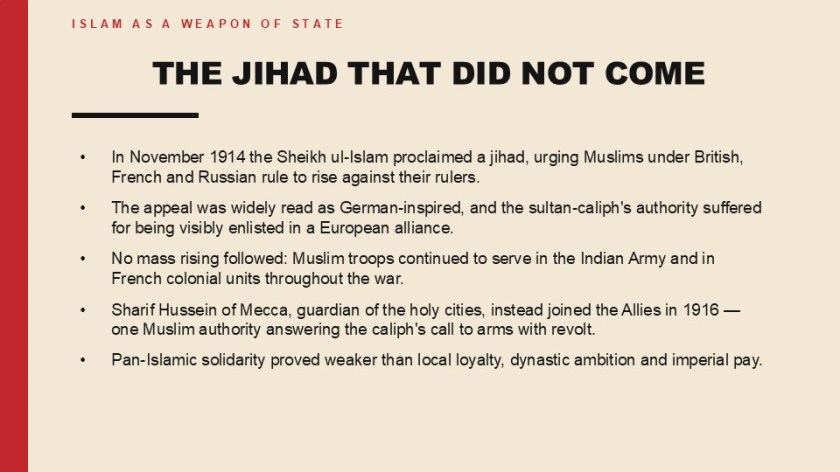
- Politics without brakes (slides 6–9) — The CUP triumvirate (Enver, Talat, Cemal) replaced constitutional politics with martial law and decree. Requisitioning, the hangings of Arab notables, the Arab Revolt, and the deportation and destruction of the Armenian population destroyed the empire’s legitimacy and its commercial base; desertion became endemic. The 1914 call to jihad failed — pan-Islamic solidarity proved weaker than local loyalty and imperial pay.
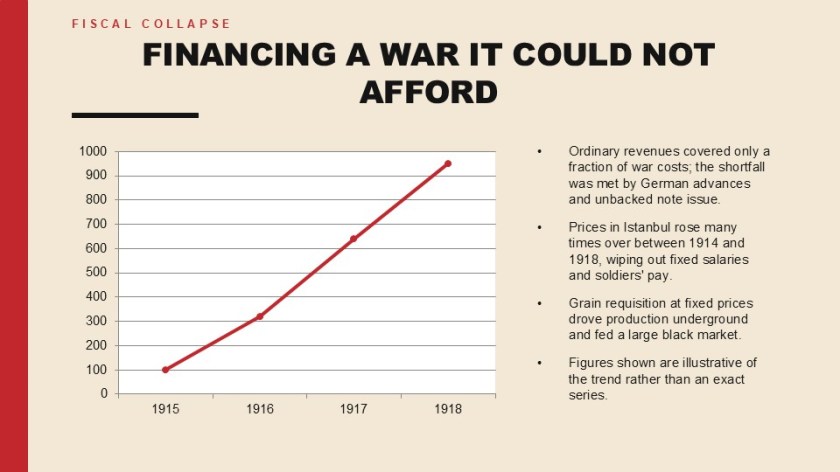
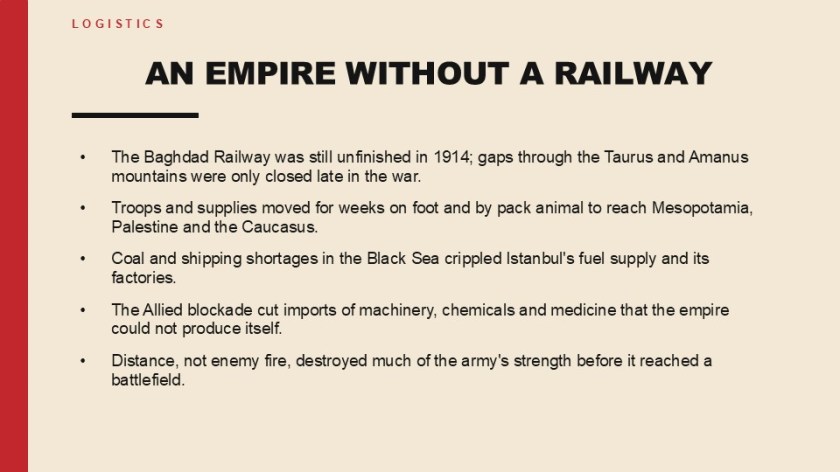
- The economics of exhaustion (slides 10–13) — War costs were met with German advances and unbacked note issue; prices soared, requisition drove grain underground. An unfinished Baghdad Railway, coal shortages and the Allied blockade meant distance destroyed armies before combat did. Disease killed more soldiers than fighting; famine in Syria and Lebanon killed hundreds of thousands of civilians.
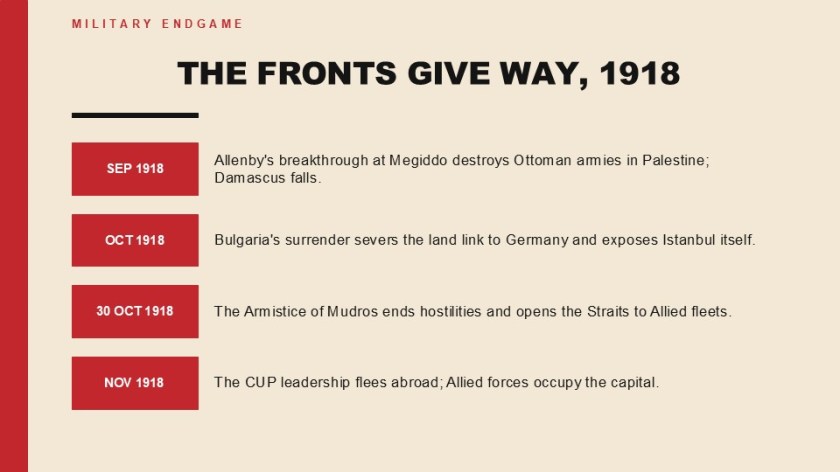
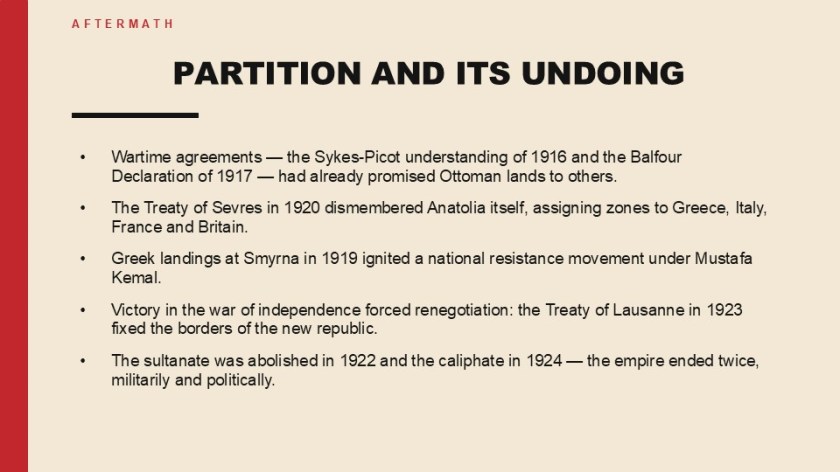
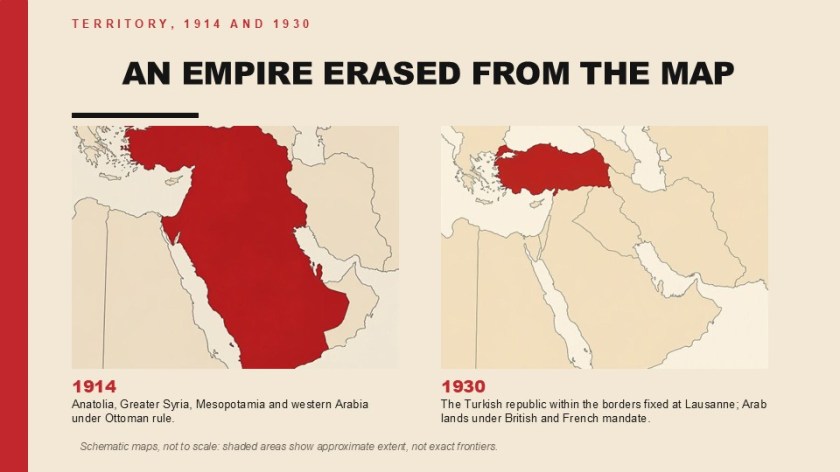
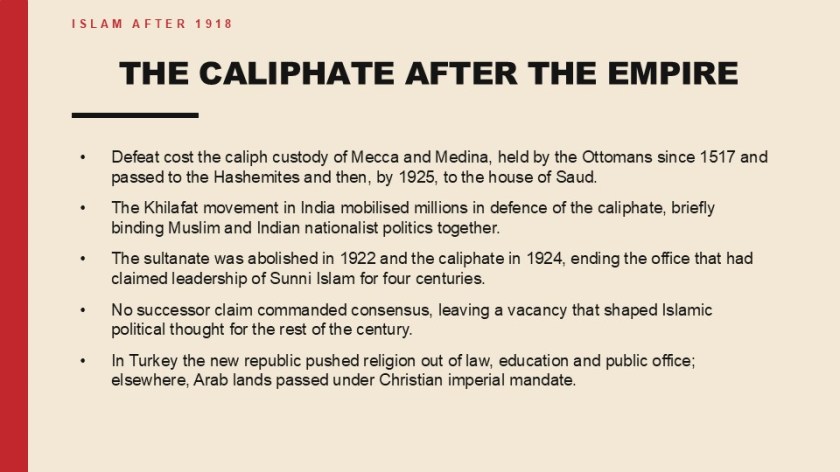
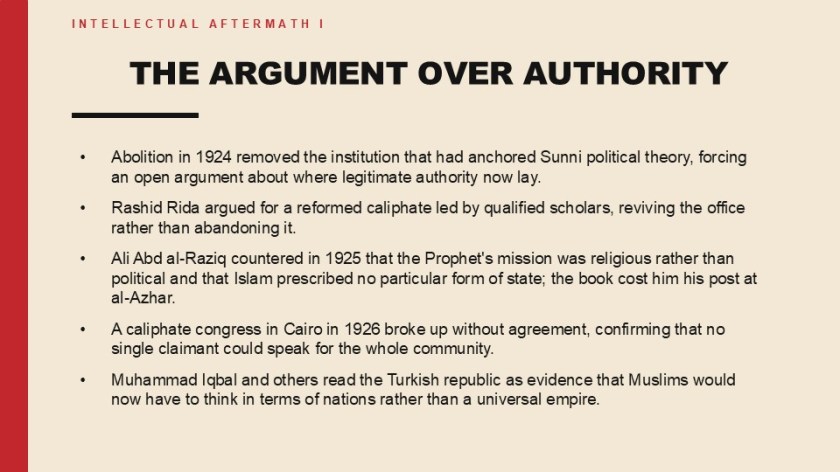
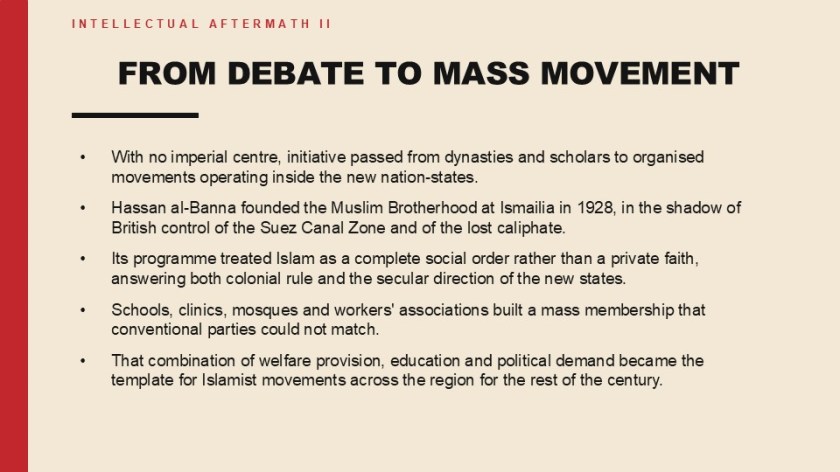
- Endgame and aftermath (slides 14–20) — Megiddo, Bulgaria’s surrender and the Mudros armistice ended the war; Sykes-Picot, Balfour and Sèvres partitioned the lands. Greek landings at Smyrna sparked Kemal’s national resistance, producing Lausanne (1923) and a republic. The sultanate fell in 1922, the caliphate in 1924 — triggering the Khilafat movement, the Rida/Abd al-Raziq debate over authority, and ultimately the rise of mass movements like the Muslim Brotherhood (1928).
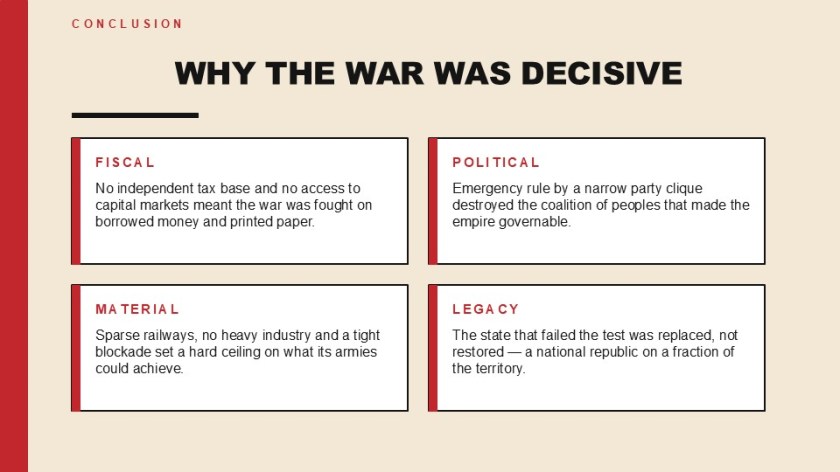
Conclusion (slide 21): Four failures — fiscal, political, material, and the resulting legacy — explain why the war was decisive: the state that failed the test was replaced rather than restored.
Note: the deck flags several figures as illustrative rather than exact (slides 11, 13, 17).