
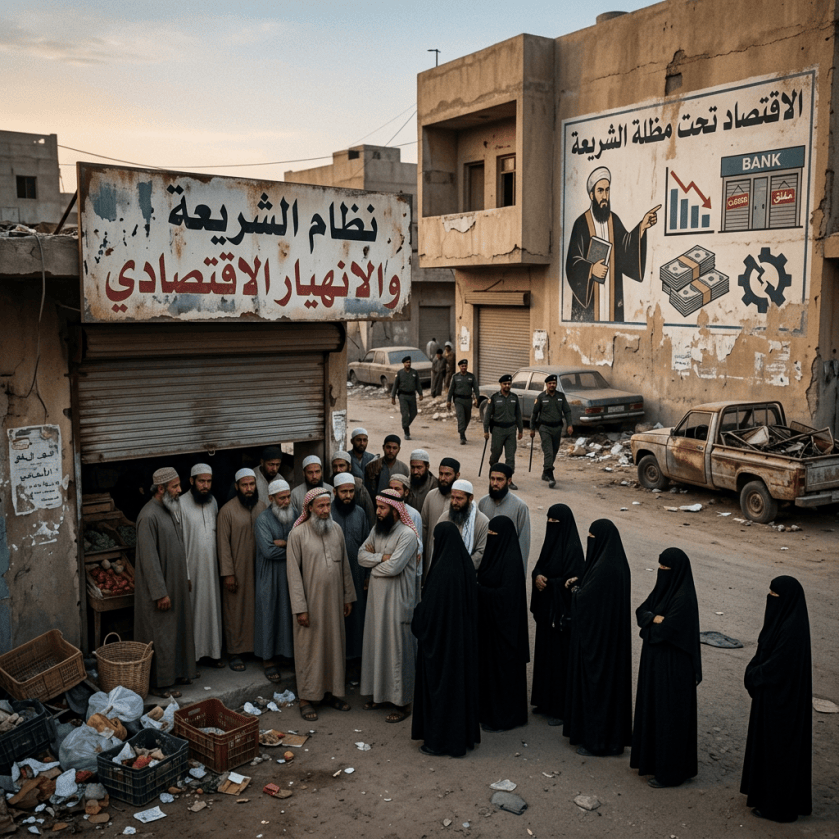
(Economic Impacts on the United States of Applying Extracted Sistani-Style Ḥarām Rulings Nationwide)
The document is an economic analysis of the negative economic impact of sharia law. It assumes a strict nationwide application of previously extracted rulings from Islamic Laws (Ayatollah Ali al-Husayni al-Sistani, Fourth Edition). It explicitly notes that “Sharia law” is not monolithic, schools differ, most real-world systems are hybrid, and the analysis is not a prediction or endorsement of any political outcome.
Core finding
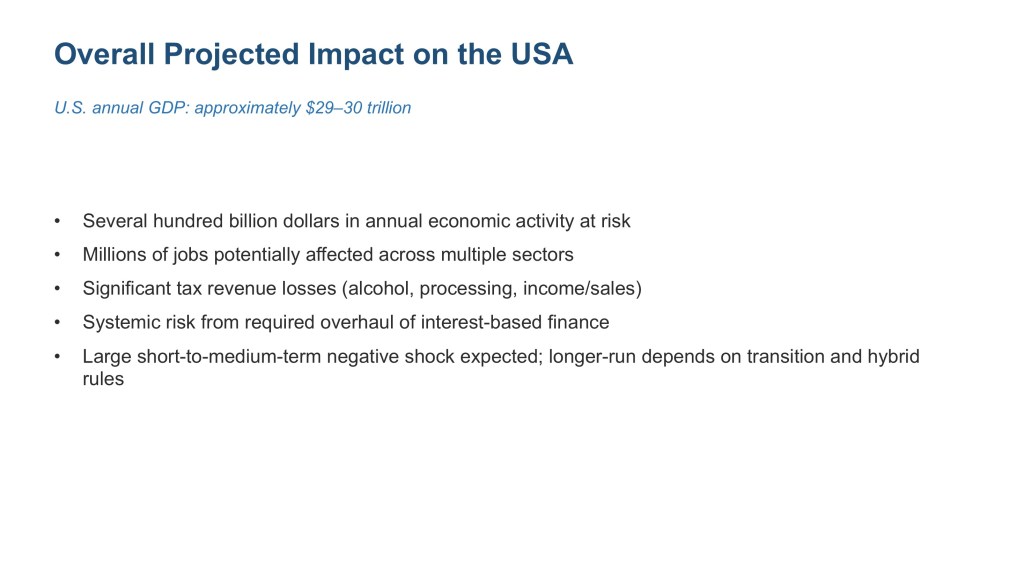
The United States (GDP ~$29–30 trillion) would face a multi-hundred-billion-dollar negative shock to annual economic activity, millions of jobs at risk, and significant tax-revenue losses. The largest systemic risk comes from the required overhaul of the interest-based financial system.
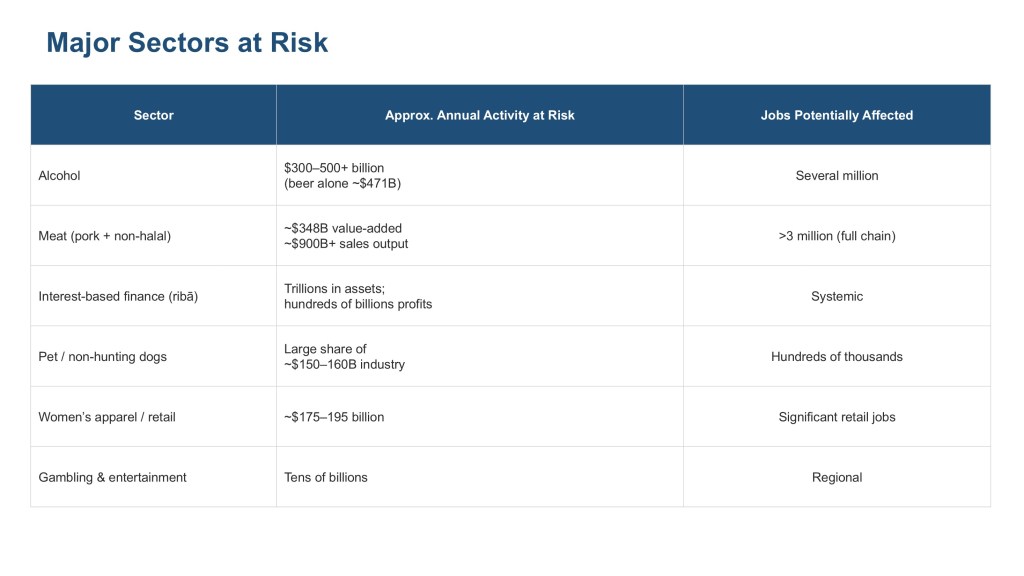
Major sectors at risk (order-of-magnitude estimates from recent industry data)
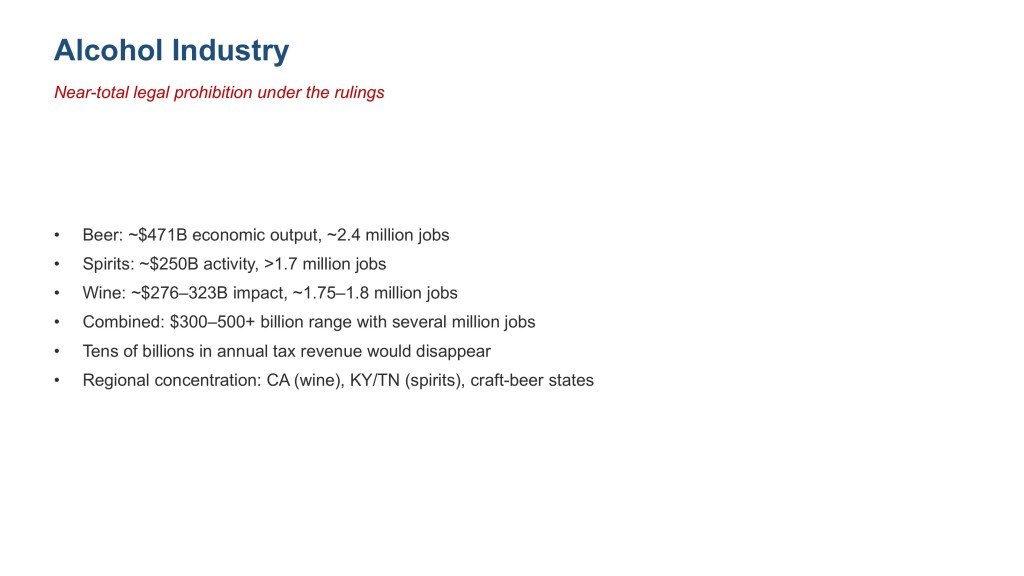
- Alcohol: $300–500+ billion in activity (beer alone ~$471B); several million jobs. Near-total legal prohibition.
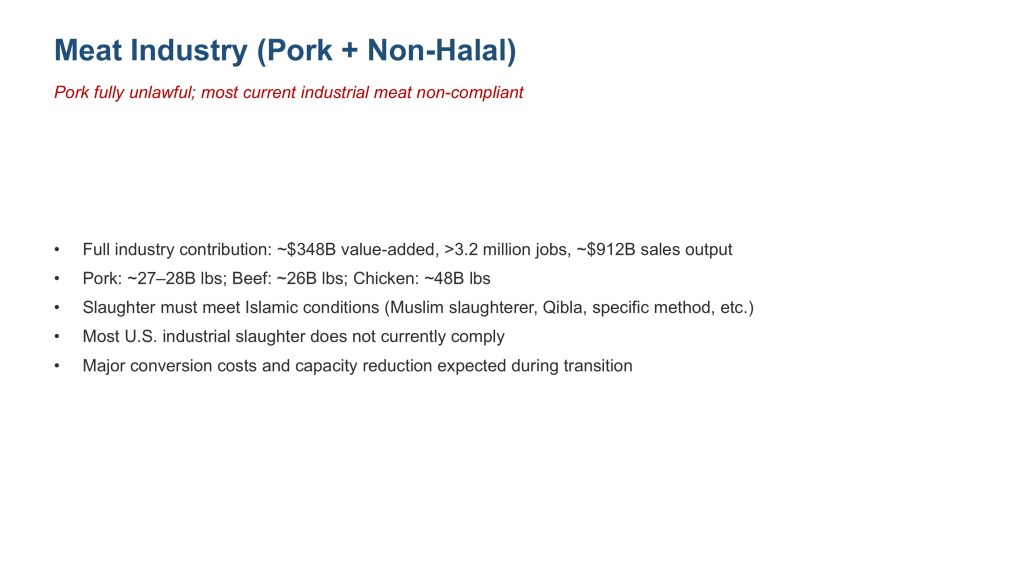
- Meat (especially pork + non-halal): Total meat/poultry contribution ~$348B value-added / ~$900B+ sales output; >3 million jobs in the full chain. Pork fully eliminated; most industrial beef/poultry would be non-compliant without conversion to Islamic slaughter methods.
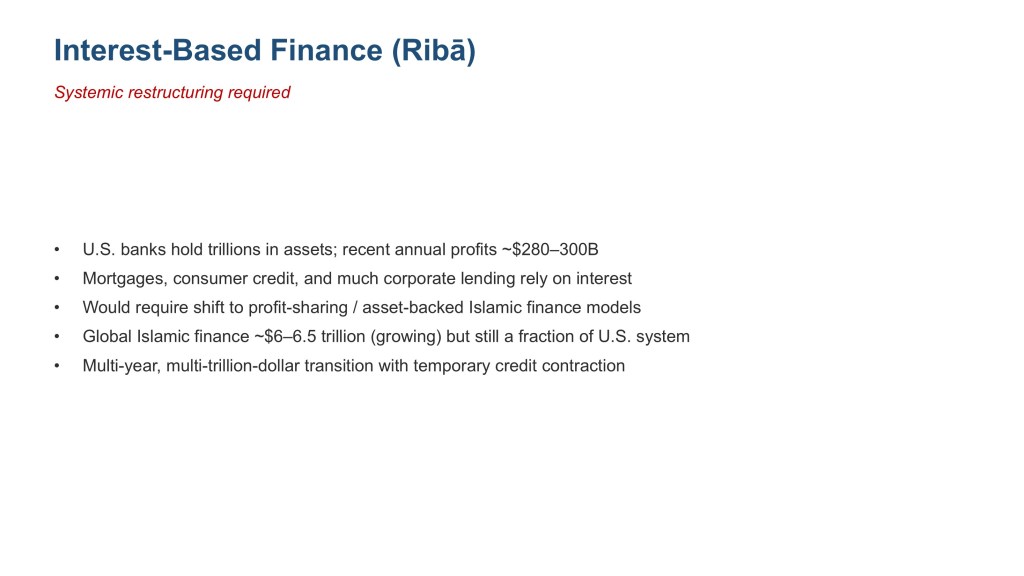
- Interest-based finance (ribā): Trillions in bank assets; hundreds of billions in annual profits. Wholesale restructuring of mortgages, loans, and banking required.
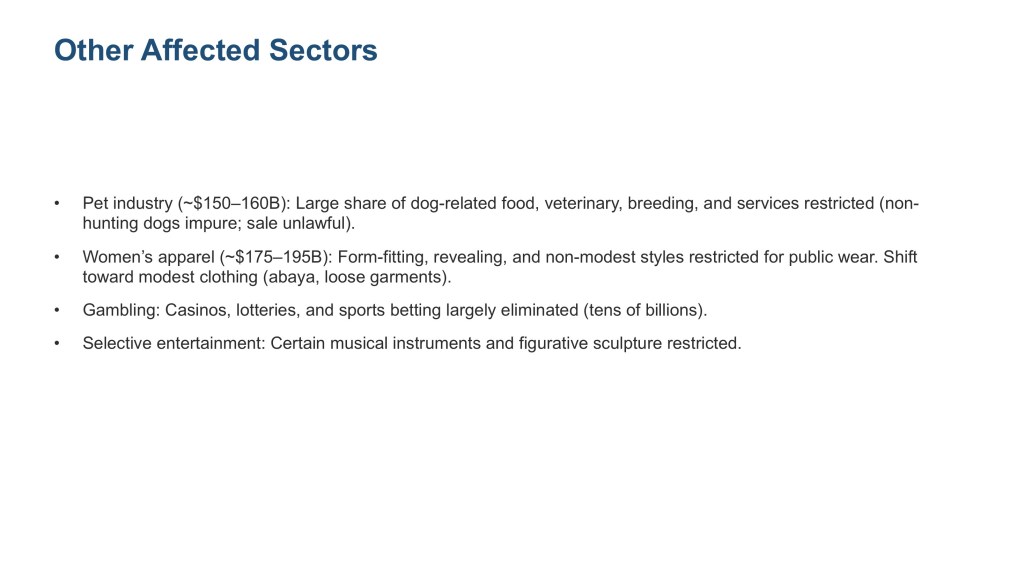
- Pet / non-hunting dogs: Large share of the ~$150–160B pet industry; hundreds of thousands of jobs.
- Women’s apparel / retail: ~$175–195B market; form-fitting and revealing styles restricted for public wear.
- Gambling & selective entertainment: Tens of billions; largely eliminated or heavily restricted.
Aggregate effects
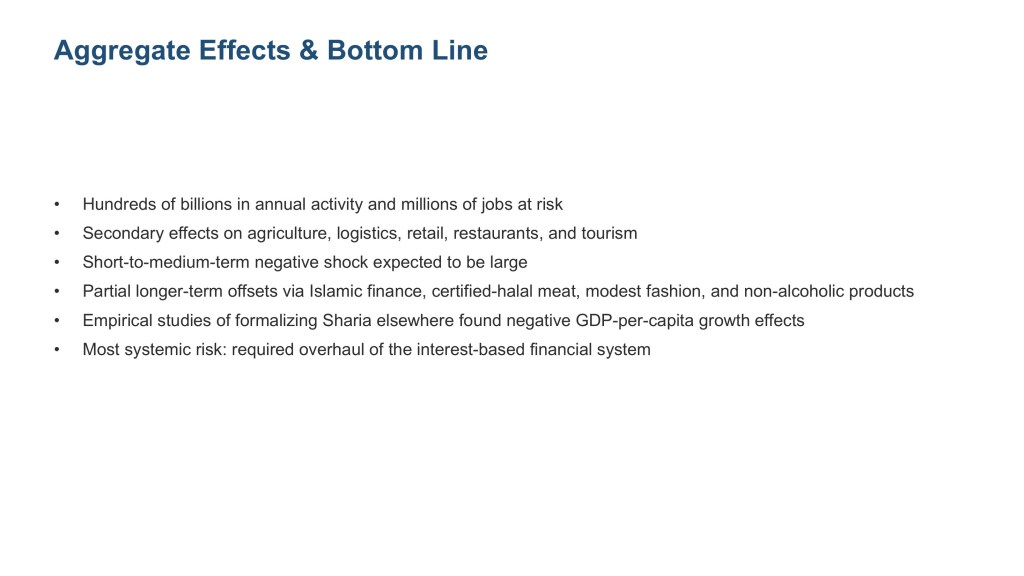
Short-to-medium-term disruption would be large due to the depth of U.S. capital markets, consumer culture, and existing supply chains. Partial longer-term offsets are possible through Islamic finance instruments, certified-halal meat, modest fashion, and non-alcoholic products, but these are currently much smaller in scale. Empirical studies of formalizing Sharia elsewhere have found negative effects on GDP-per-capita growth. Regional impacts would be concentrated in the Midwest (pork/agriculture), wine/spirits regions, financial hubs, and nationwide retail/hospitality.
Bottom line
A substantial negative shock measured in hundreds of billions of dollars and millions of jobs in the short-to-medium term, with the most systemic risk arising from the restructuring of interest-based finance. Longer-run outcomes would depend on enforcement strictness, transition speed, and the degree of hybrid implementation. All figures are illustrative projections drawn from industry reports applied to the extracted rulings—not forecasts.


So you are saying it would be a bad thing, right?
LikeLike