Including the Absence of Inventions from European Colonies
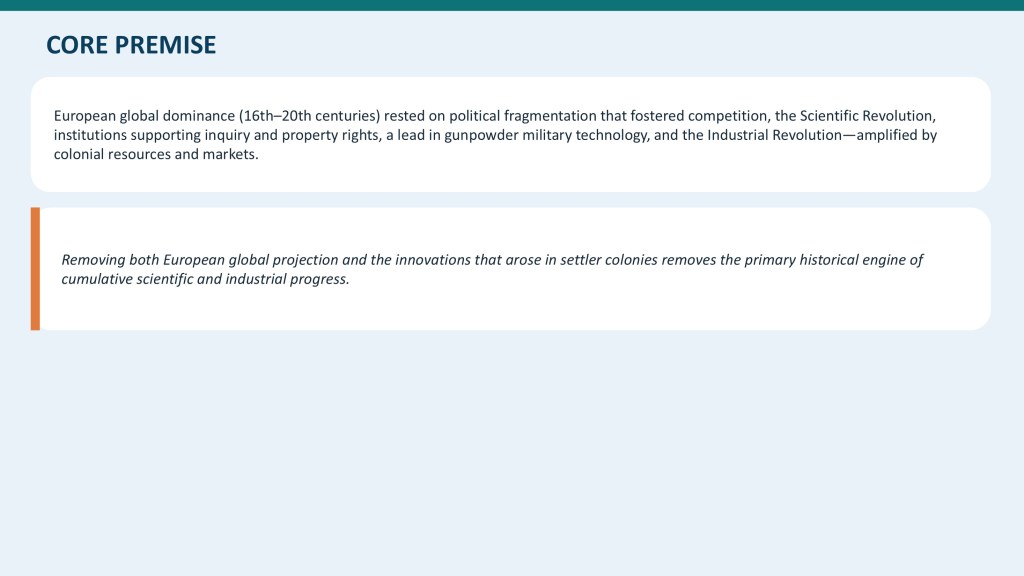
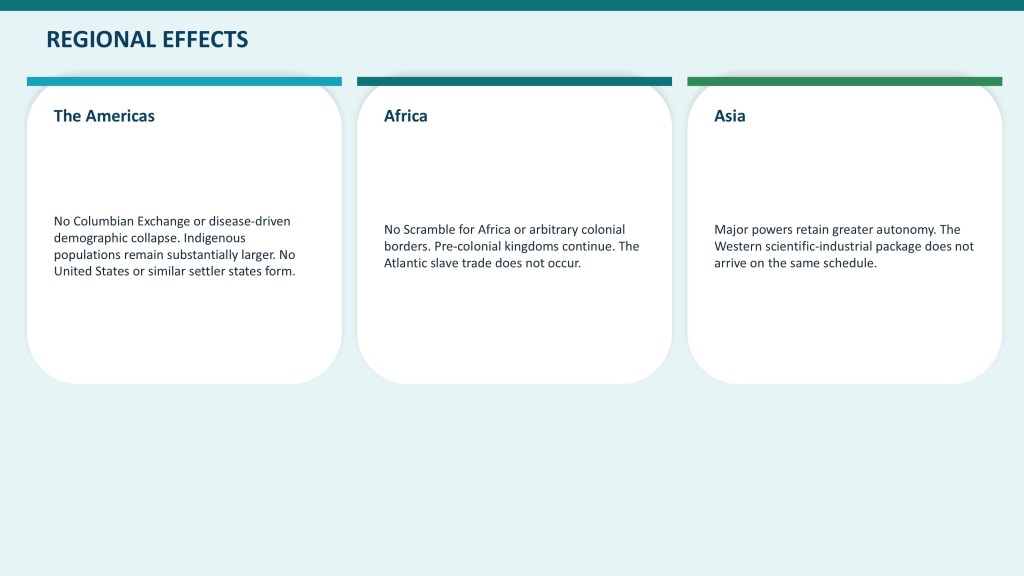
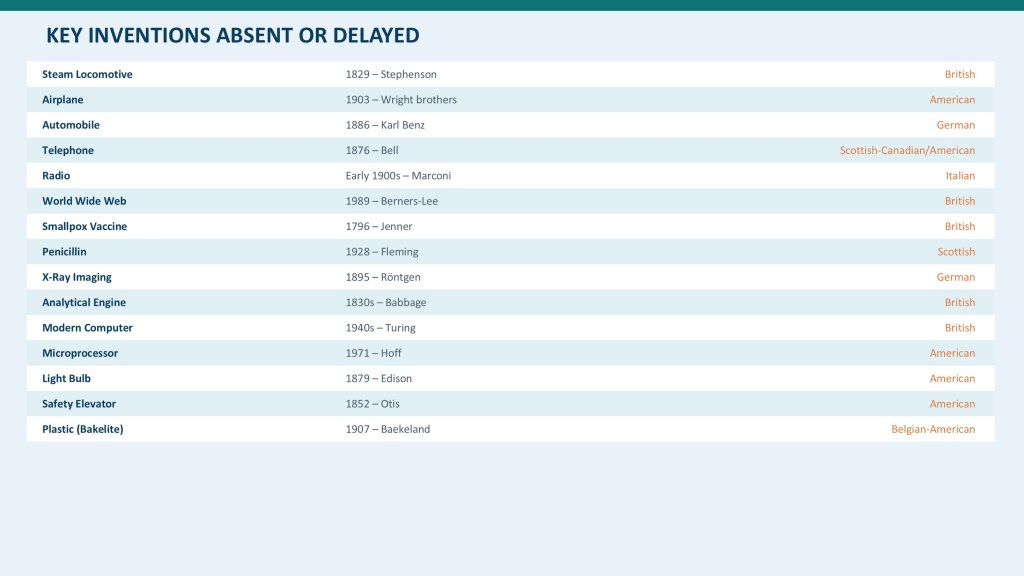
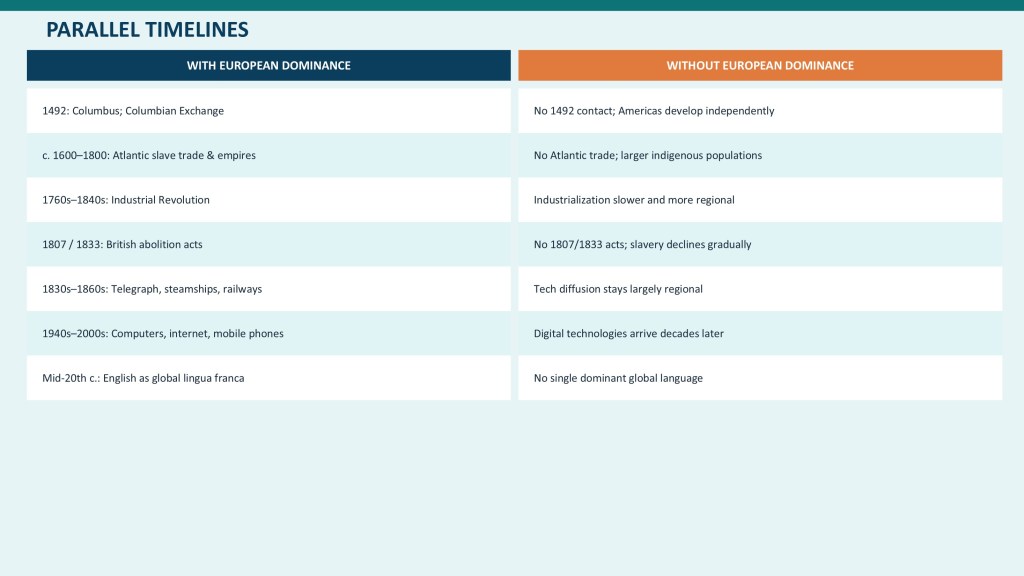
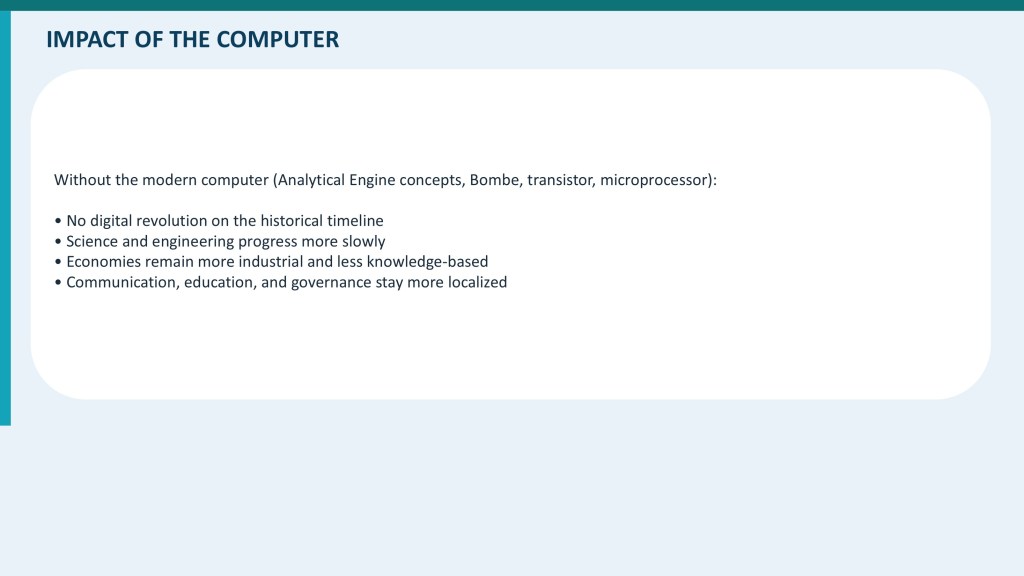
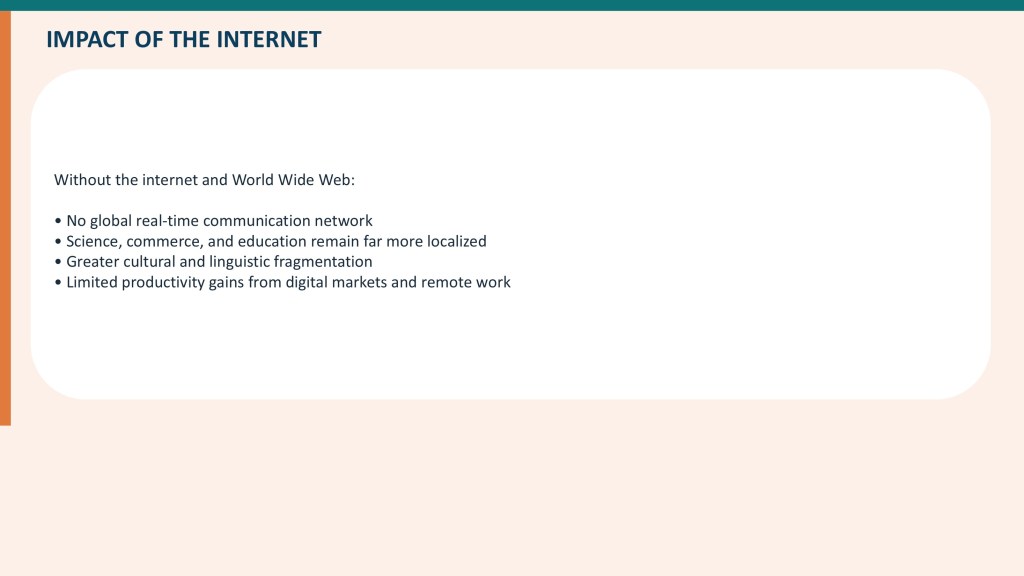
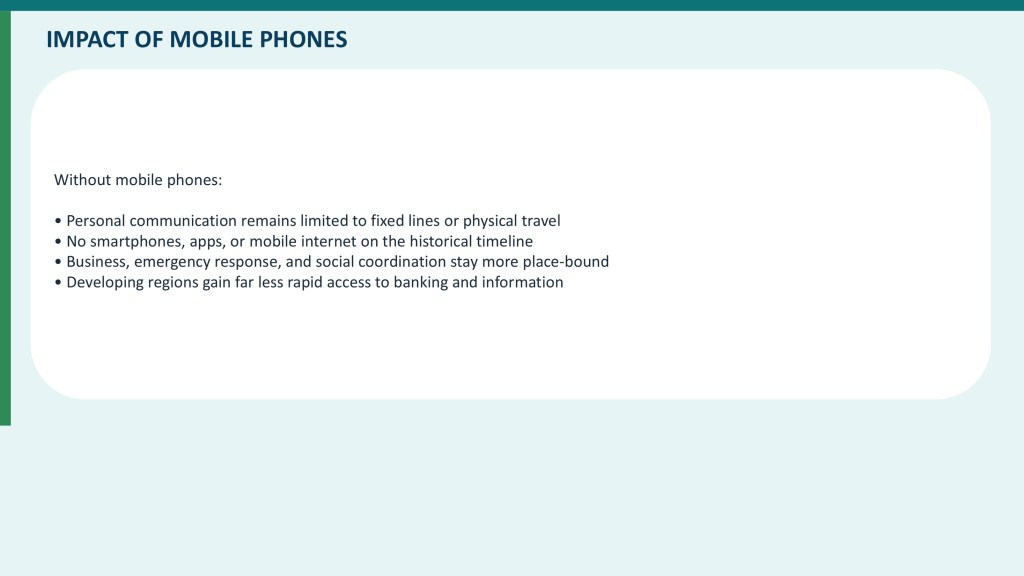
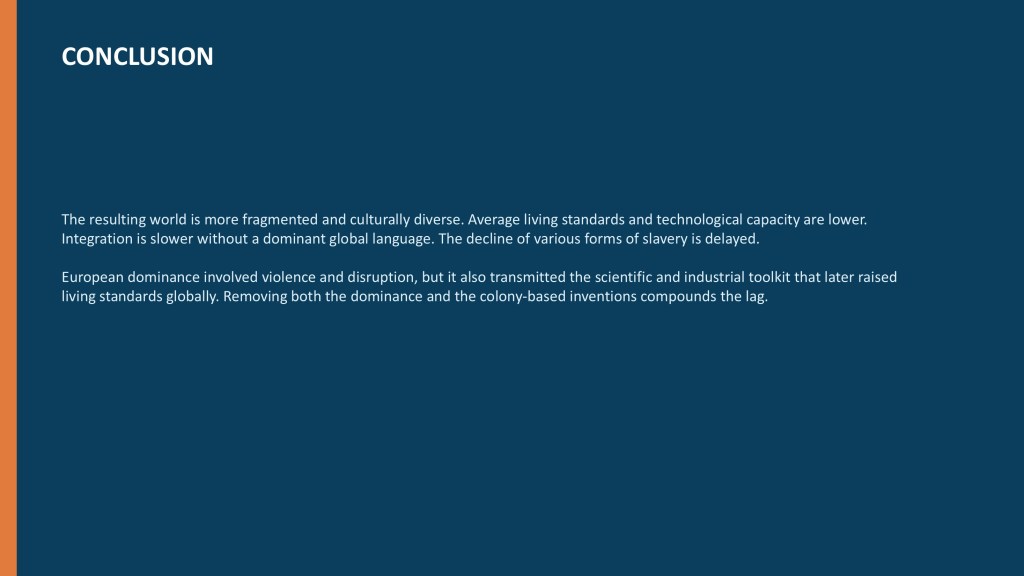
A world without Europeans would likely be more fragmented, demographically distinct, and technologically slower to develop. The Americas would have avoided the Columbian Exchange and the catastrophic population losses from Old World diseases, leaving indigenous societies larger and continuing along their own political and cultural paths rather than giving way to settler states. Africa would have escaped the Atlantic slave trade and the later Scramble, preserving pre-colonial kingdoms and avoiding the long-term institutional damage associated with the trade, while Asia’s major powers would have retained greater autonomy without the Opium Wars, the British Raj, or comparable interventions. Scientific and industrial progress would still have occurred in Europe from internal factors such as coal, institutions, and the scientific method, but without colonial markets and the later innovations that arose in settler societies—the airplane, telephone, mass production scaling, transistor, and related advances—the rapid 19th- and 20th-century acceleration would not have taken place. Living standards and population growth would therefore have risen more gradually worldwide, and the digital revolution of computers, the internet, and mobile phones would have arrived decades later or in different forms.
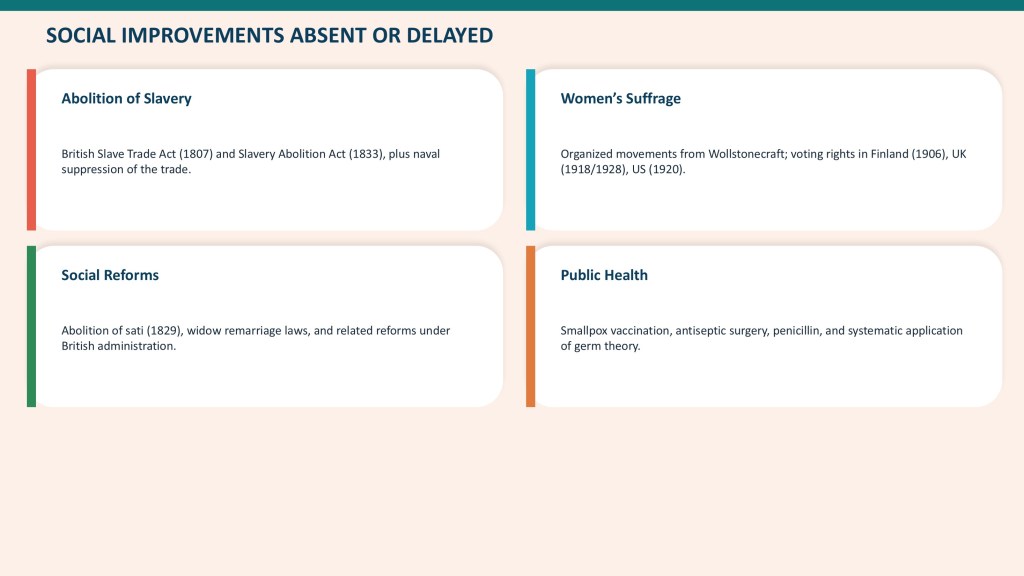
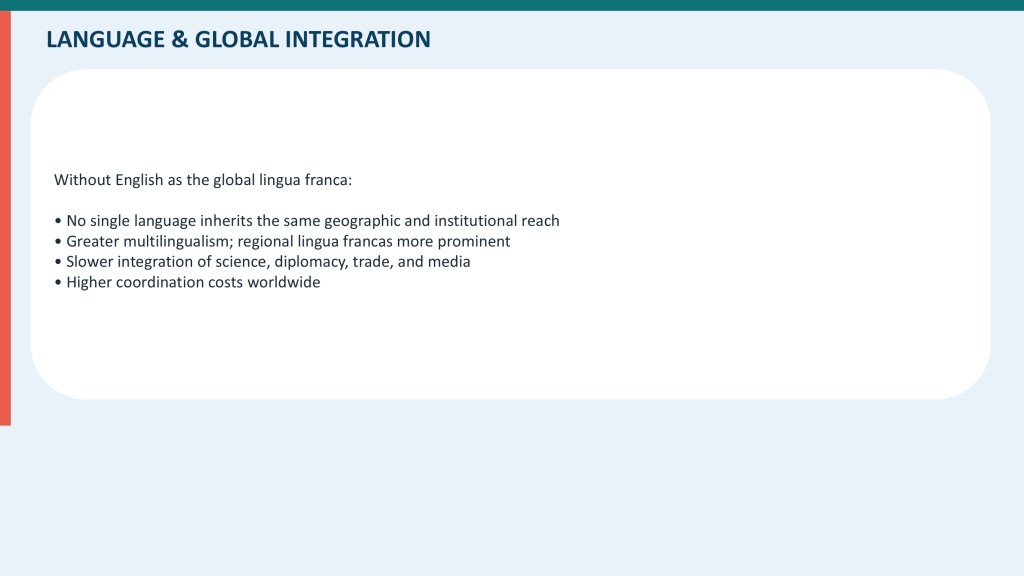
English would never have become the global lingua franca, so no single language would have provided the same geographic and institutional reach; multilingualism and regional lingua francas would predominate, raising coordination costs in science, trade, and diplomacy. The specific British abolitionist movement led by Wilberforce would not have formed around the Atlantic trade, so the 1807 and 1833 acts and the naval suppression that followed would be absent; other forms of slavery would likely have declined more slowly and with less international pressure. Social reforms such as the abolition of sati and the organized women’s suffrage campaigns that spread from Europe and its settler societies would also be missing or delayed. The result would be a recognizable but less integrated, less prosperous, and more culturally continuous world—one in which the costs of European expansion never occurred, but neither did the cumulative scientific, industrial, and institutional toolkit that later raised material living standards across much of the globe.
On the question of war, the absence of a dominant power like the modern United States (or the earlier British Empire) would very likely mean more frequent and less constrained wars in many regions, not fewer. Warfare was the normal condition of human societies long before Europeans achieved global reach. Archaeological and historical evidence shows high rates of violent death in pre-state and early state societies across the Americas, Africa, Asia, and Europe itself. Removing European global projection does not remove the underlying drivers of war: competition for resources, status, territory, and security. What European dominance and later U.S. hegemony uniquely provided was a temporary reduction in great-power interstate war and a degree of external restraint on smaller conflicts. Without that external power, regional hegemons would still fight for dominance inside their own spheres, smaller polities would face fewer outside constraints, and the background rate of organized violence would almost certainly be higher and more continuous than the relatively low levels of interstate war seen since 1945.