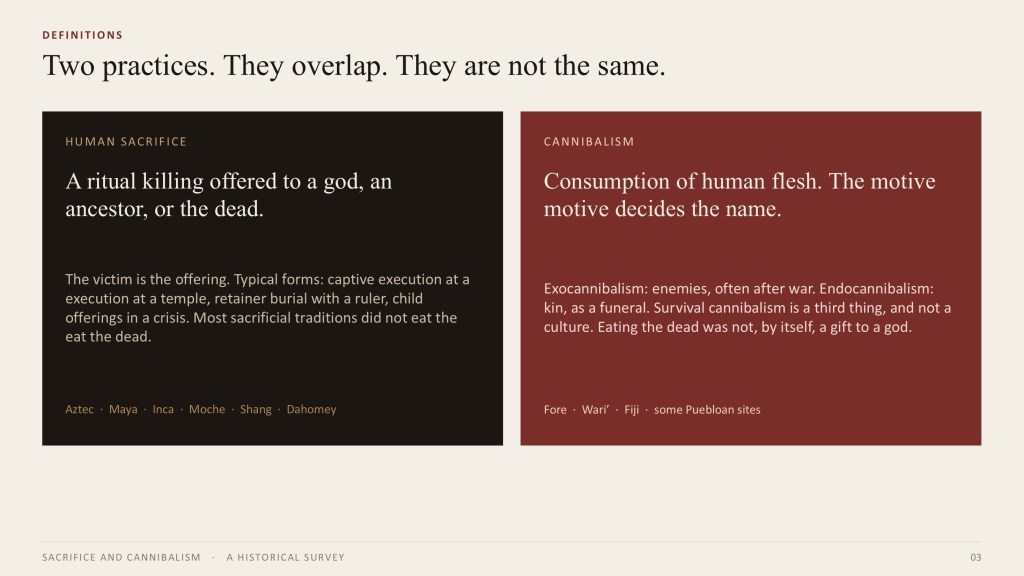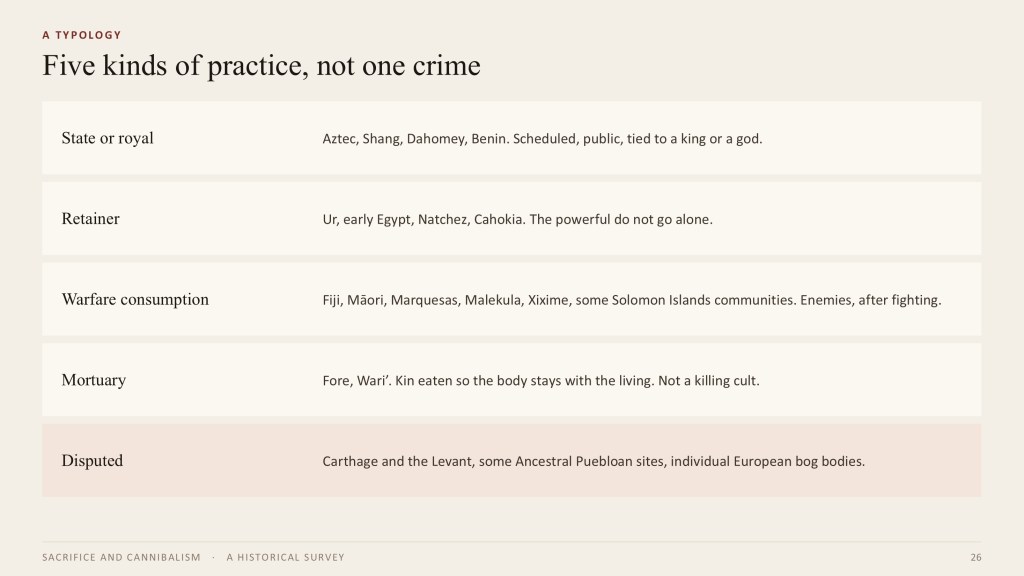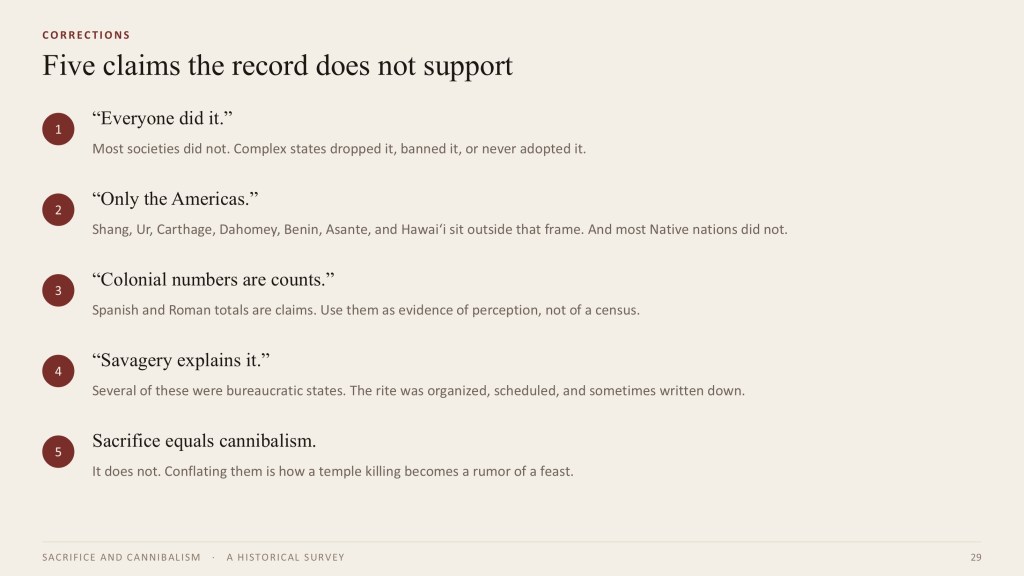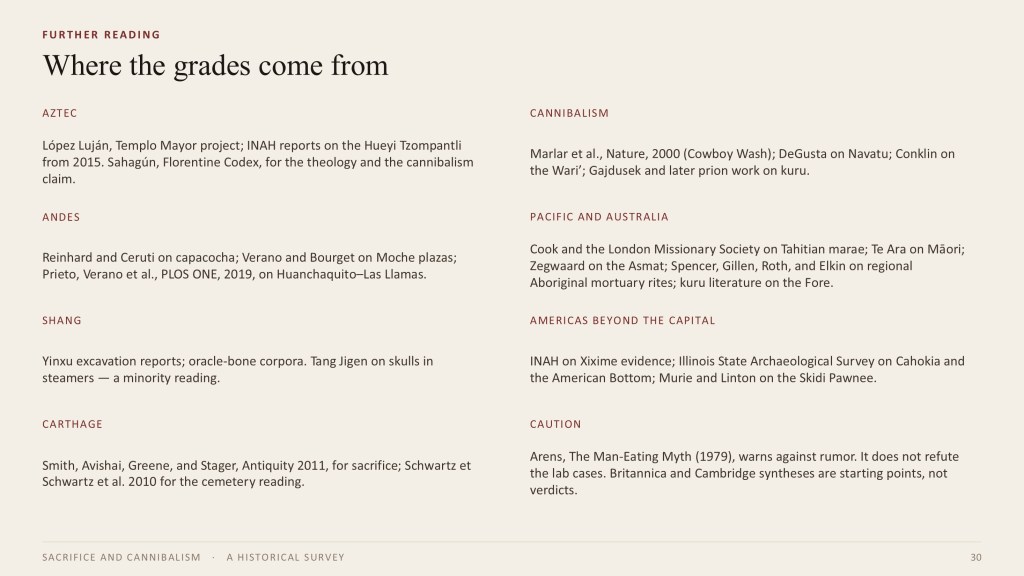
Societies where human sacrifice or cannibalism is supported by archaeology, texts, or direct observation. It grades the evidence and treats body counts as claims, not censuses. Sacrifice and cannibalism are kept separate: most sacrificial states did not eat the dead, and most mortuary cannibalism was not an offering to a god.
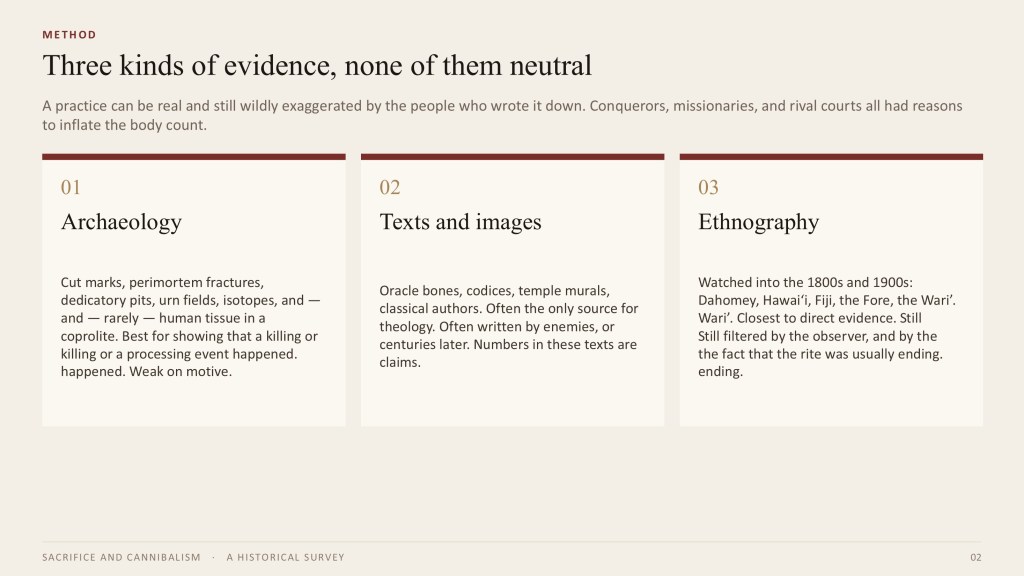
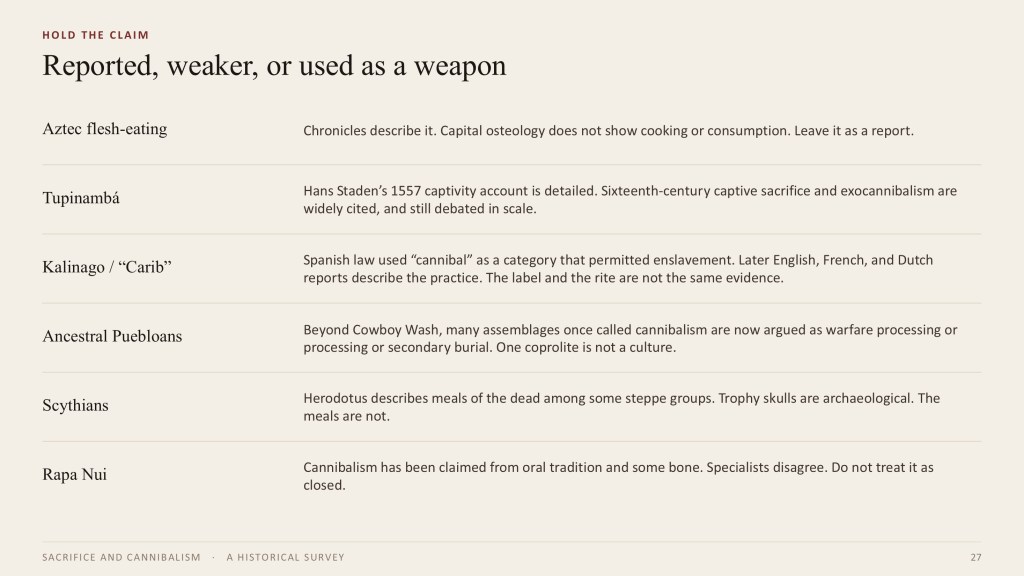
The method section says archaeology shows that a killing or a processing event happened, texts supply the theology and are often written by enemies, and ethnography is closest to direct evidence but usually comes from the moment a rite was ending. A practice can be real and still wildly exaggerated.
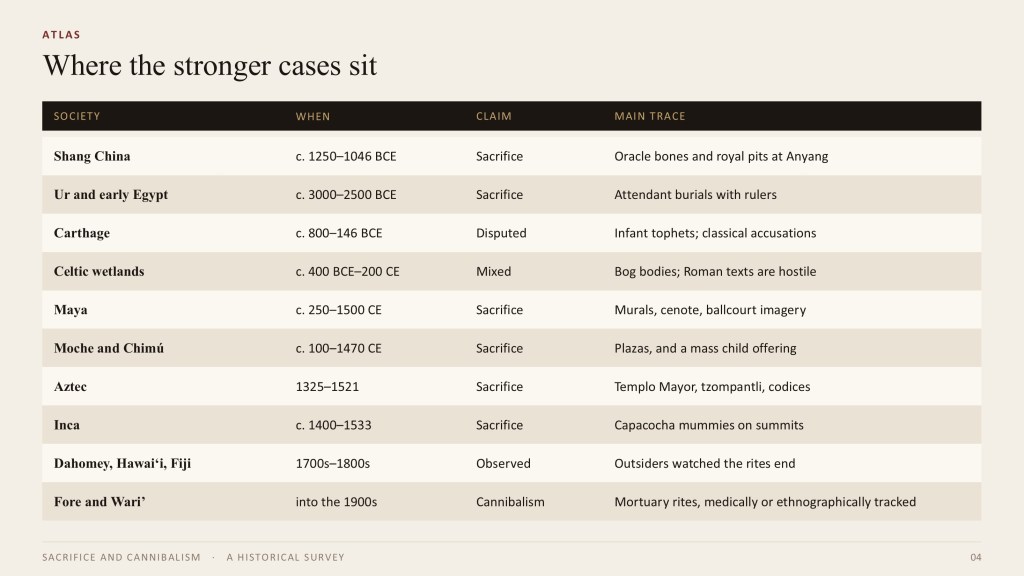
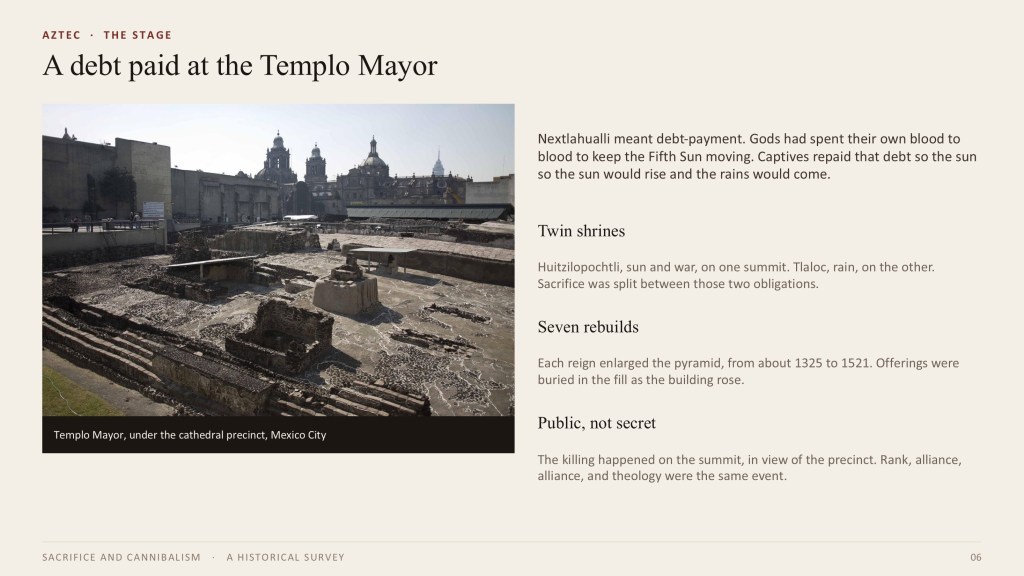
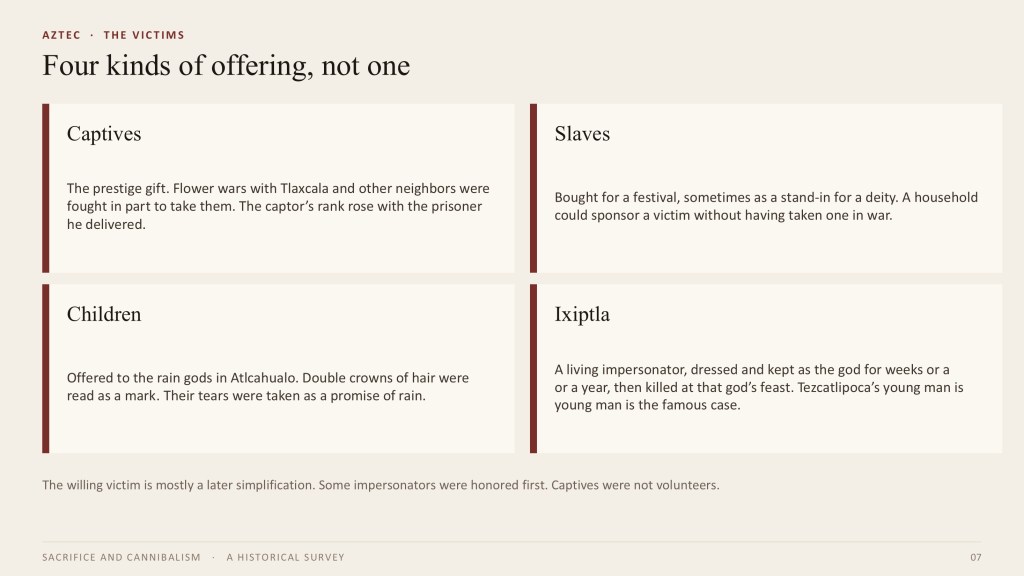
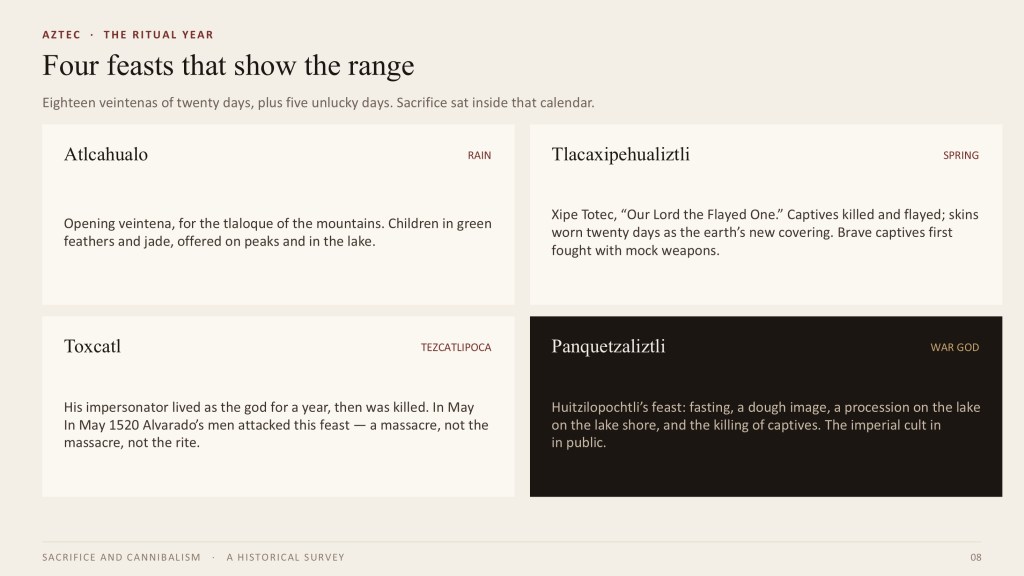
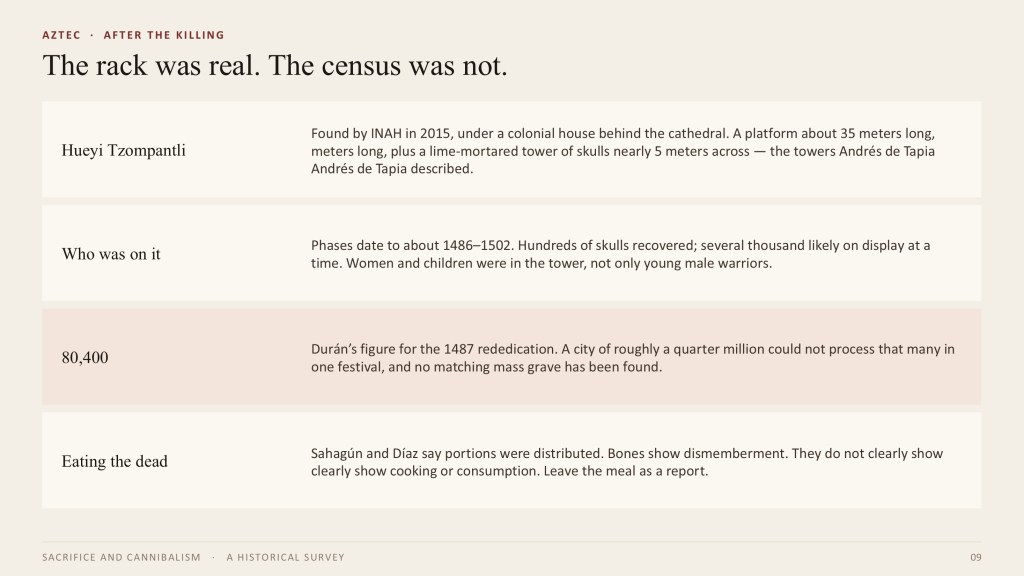
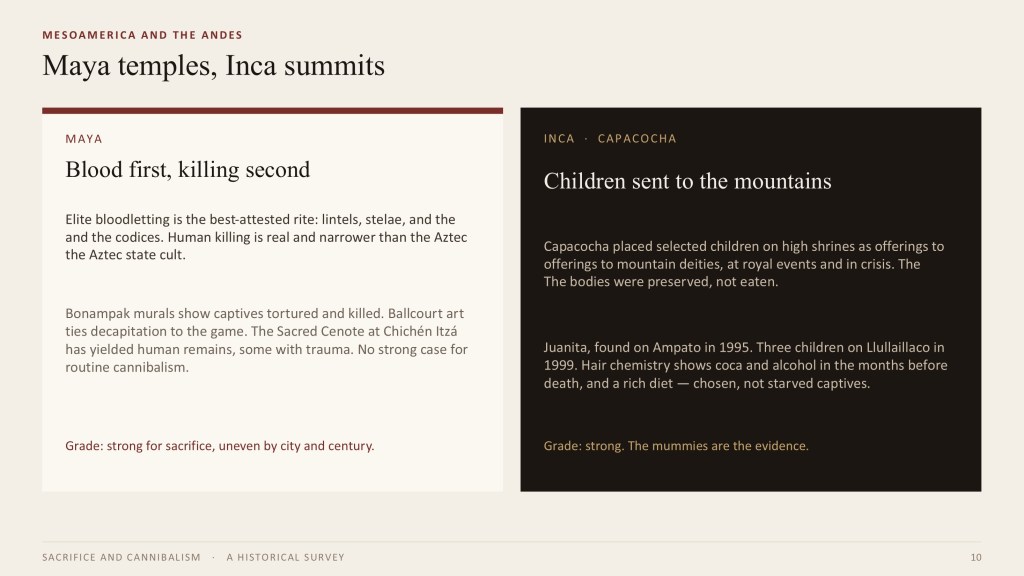
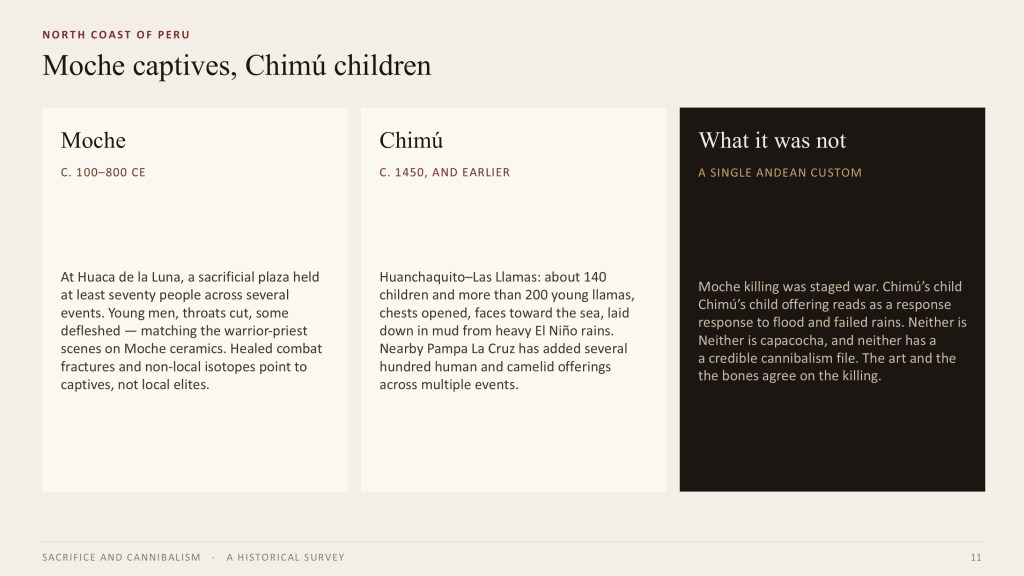
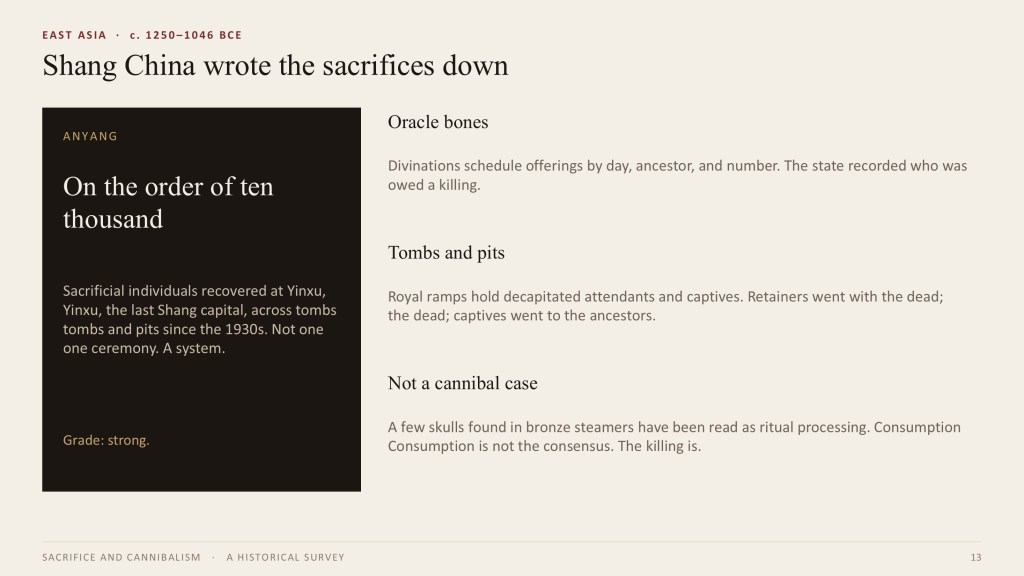
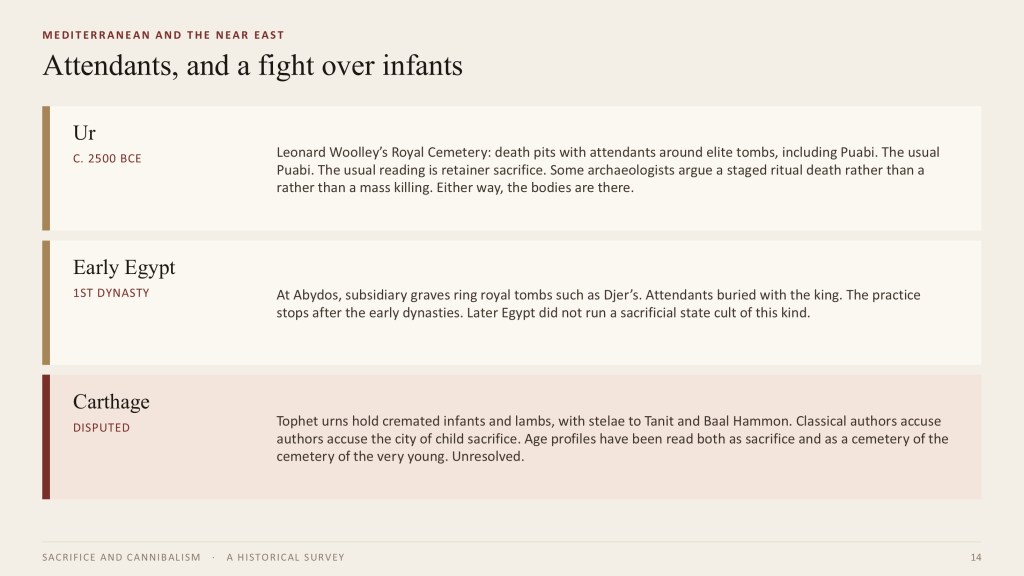
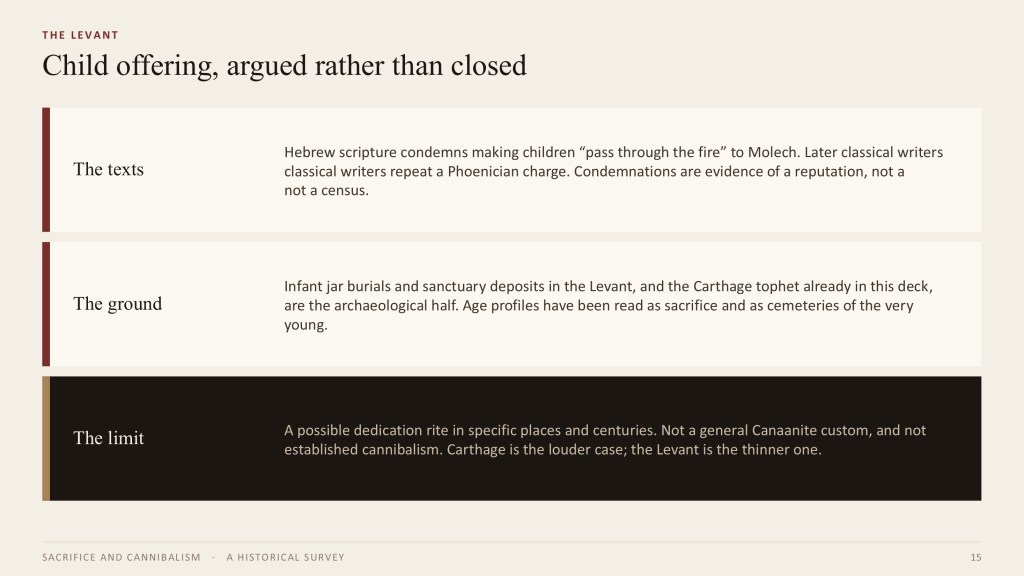
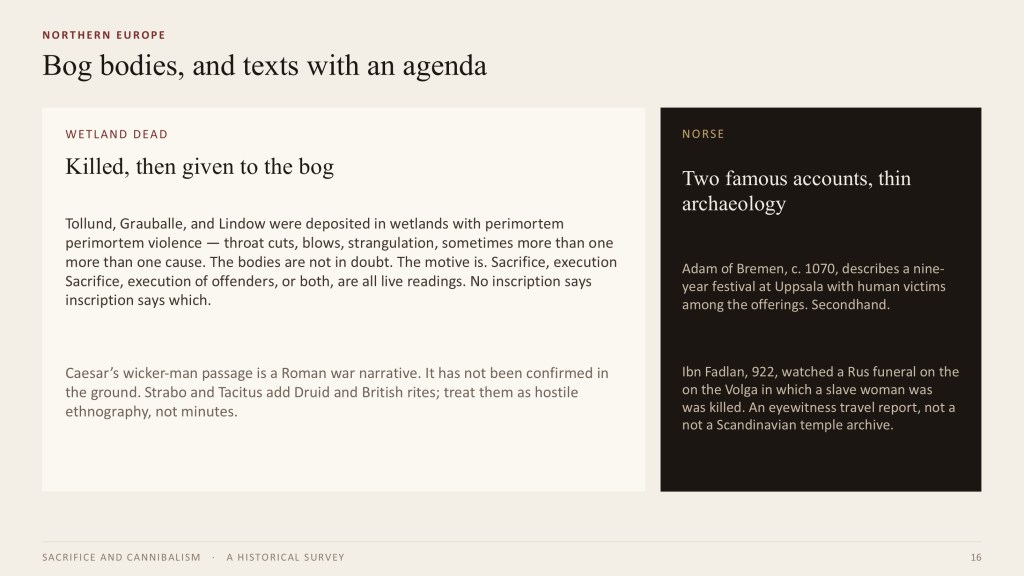
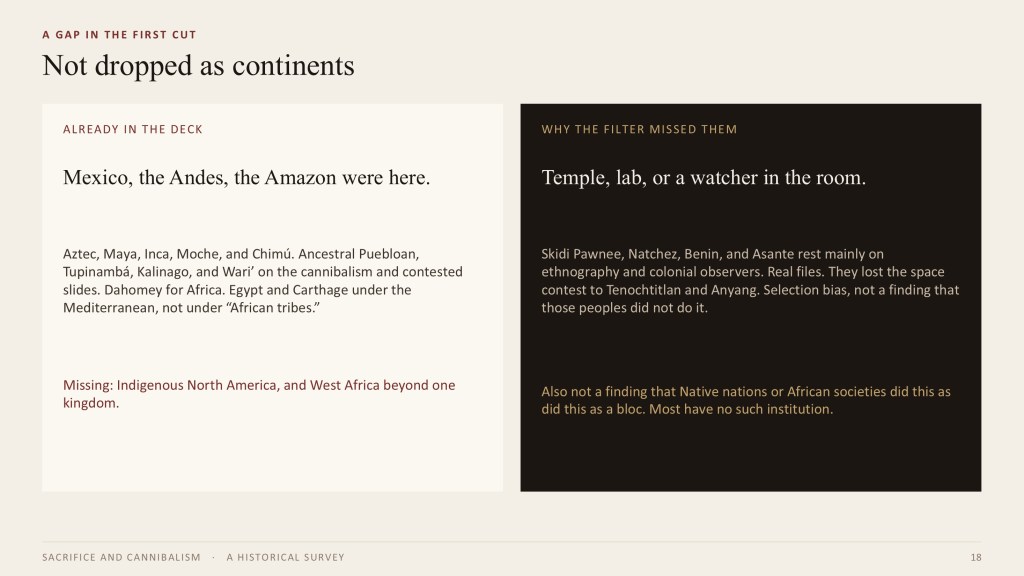
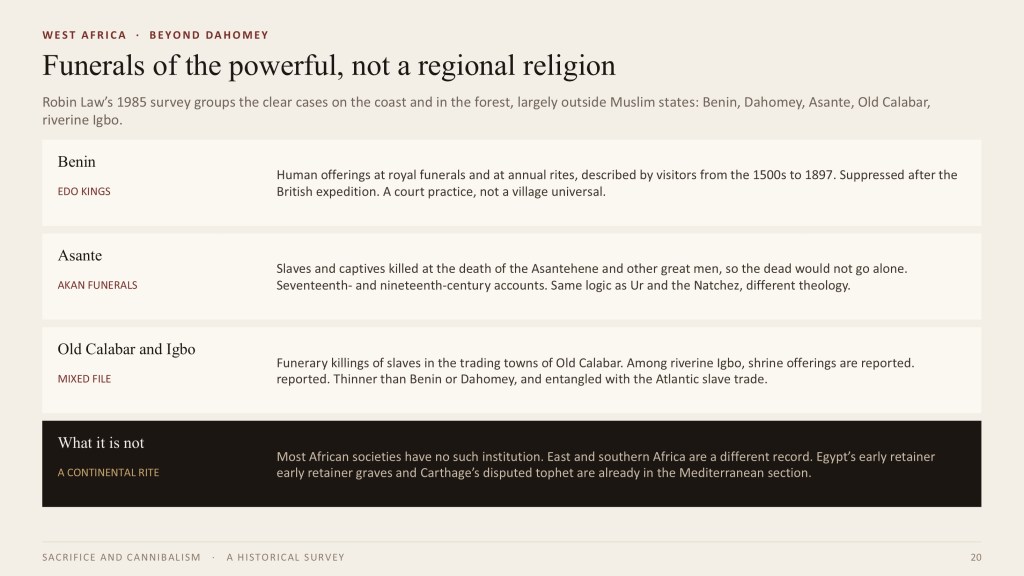
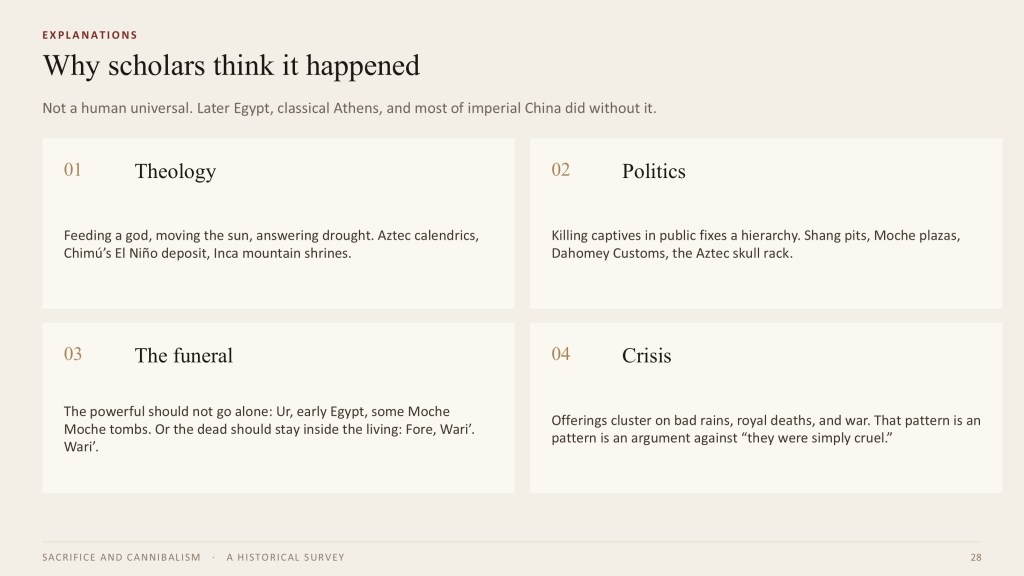
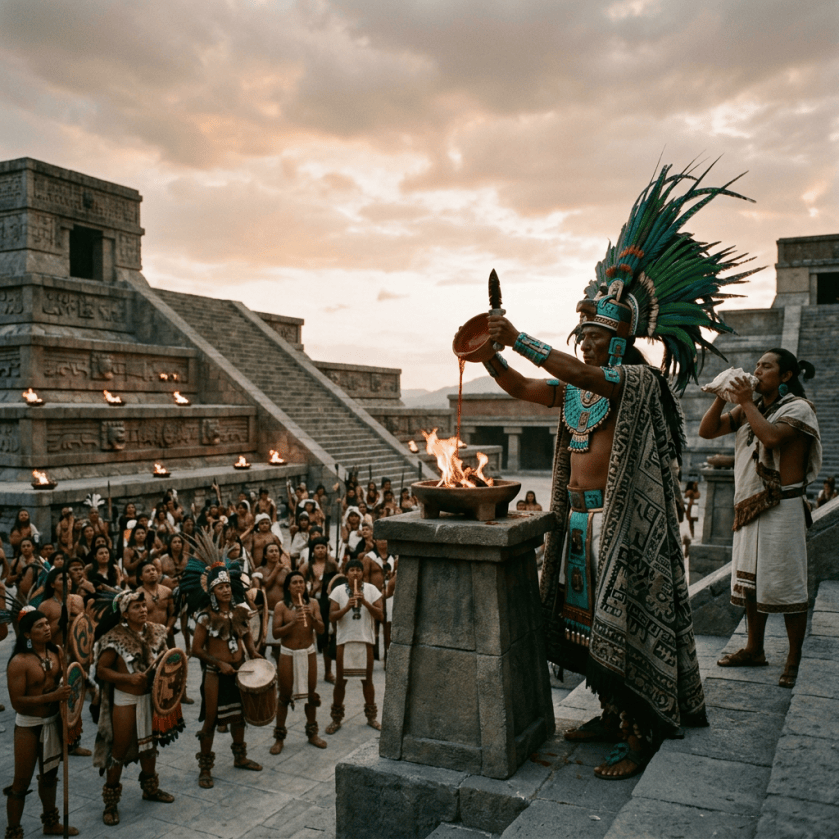
The strongest sacrifice cases are the Aztec state cult, given five slides on the Templo Mayor, the victims, the feast calendar, and the skull rack; Maya temple and cenote evidence; Inca capacocha mummies; Moche captive plazas and the Chimú child offering; Shang oracle bones and pits at Anyang; retainer burials at Ur and in early Egypt; and Dahomey, Benin, and Asante royal funerals. Carthage and the Levant stay open. Bog bodies and Norse accounts are marked as hostile or secondhand texts.
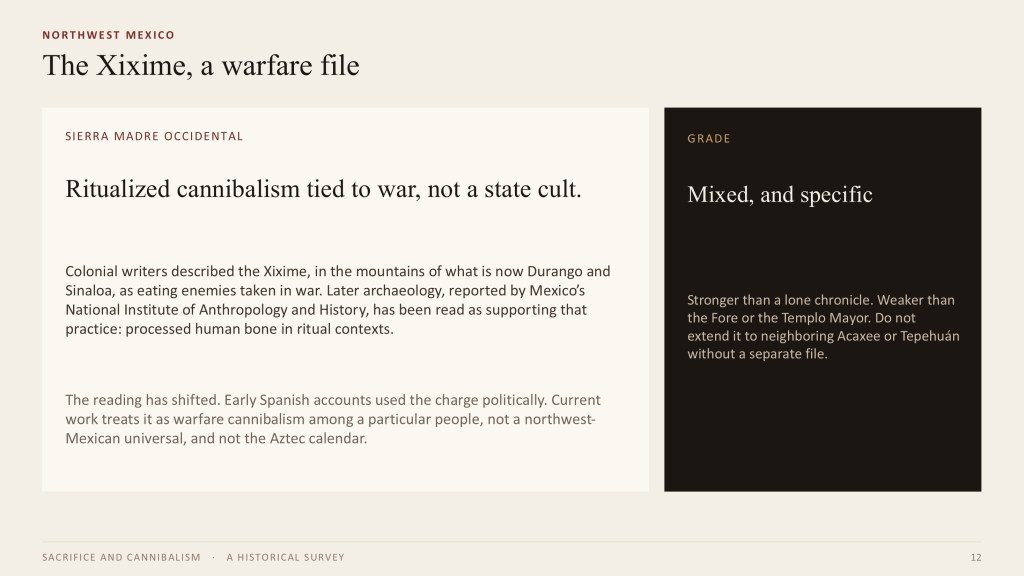
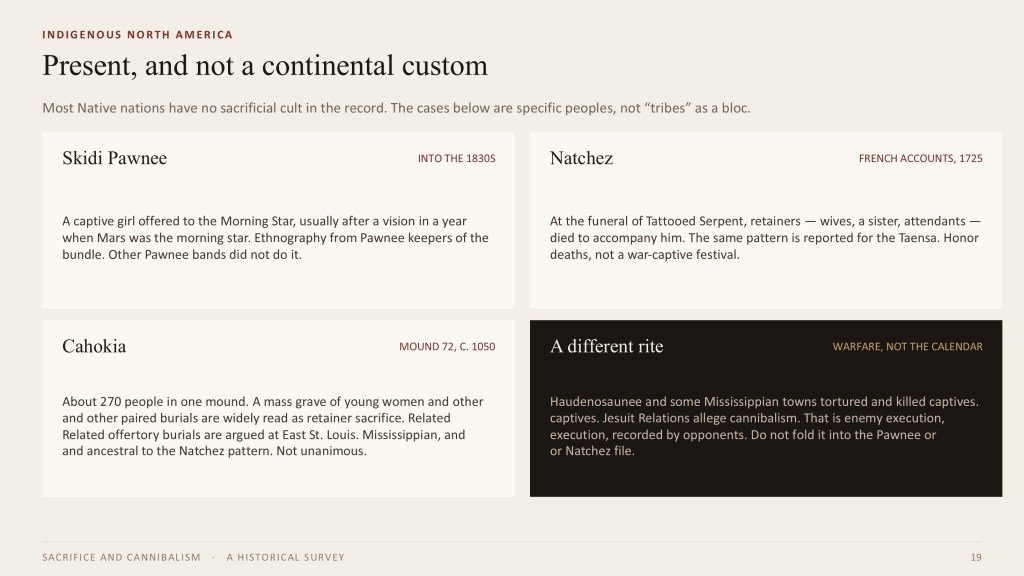
Indigenous North America is a specific file, not a continental custom: Skidi Pawnee Morning Star sacrifice, Natchez retainer deaths, and Cahokia’s Mound 72, with East St. Louis noted. The Xixime of northwest Mexico are a warfare-cannibalism case.
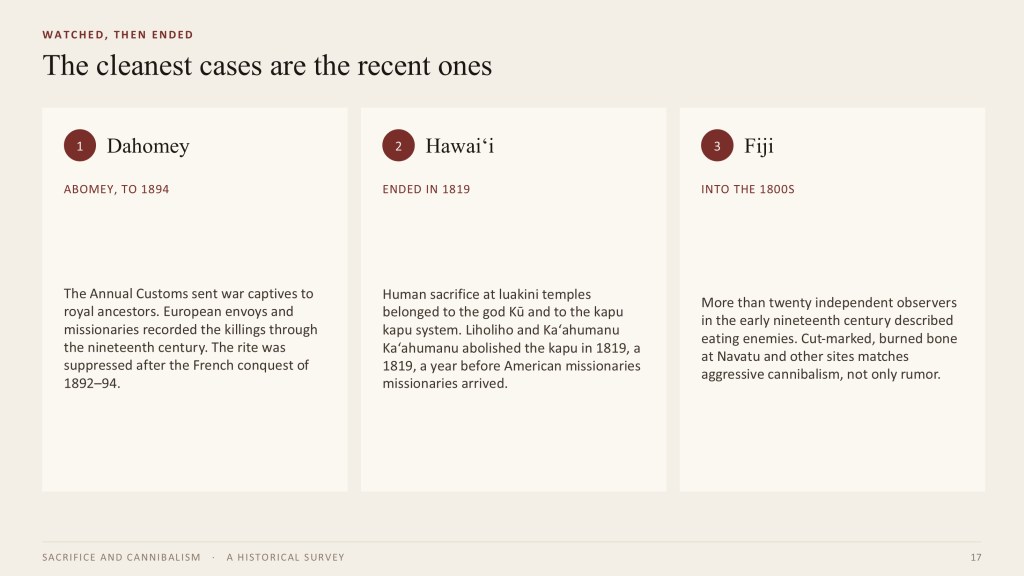
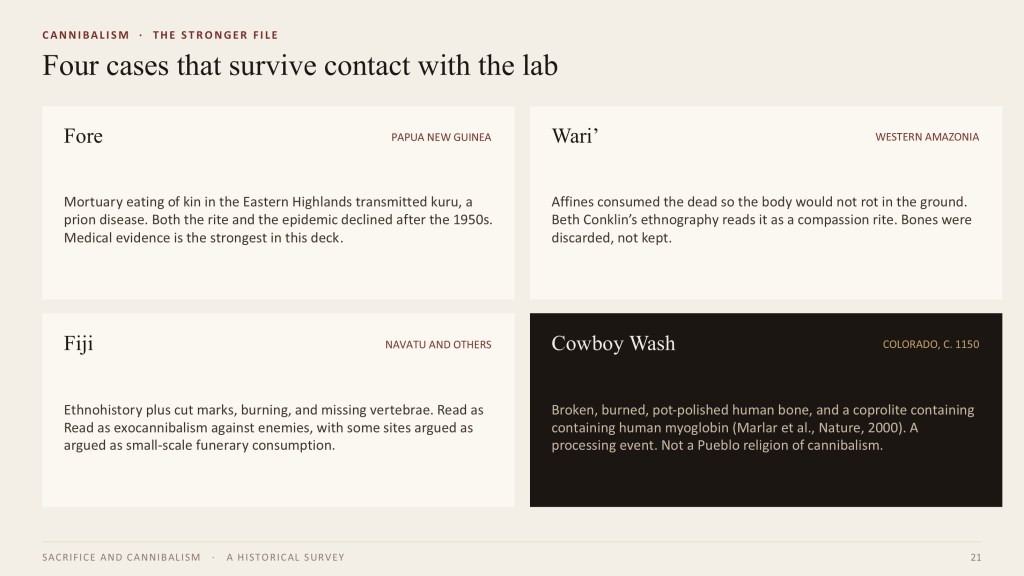
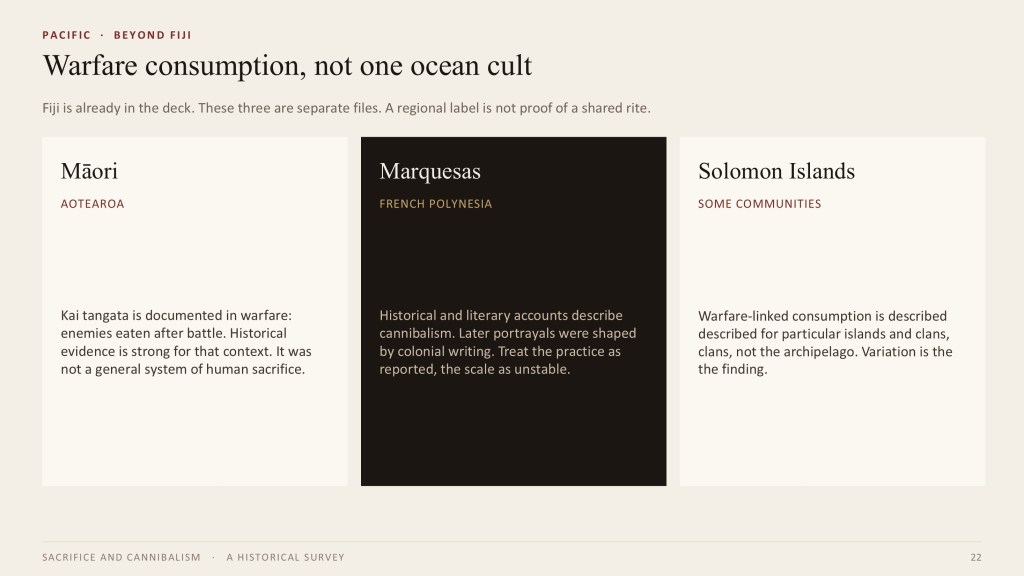
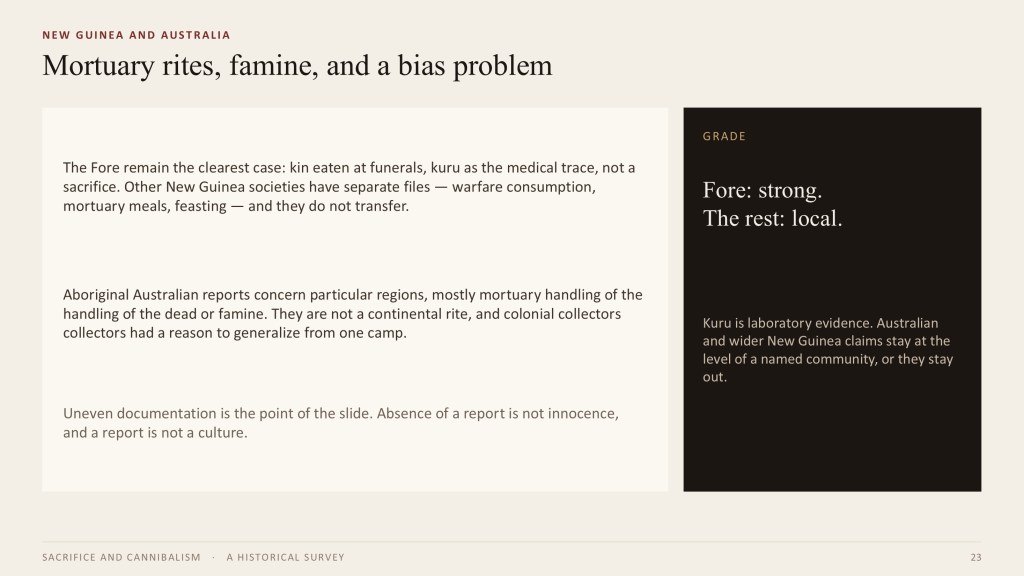
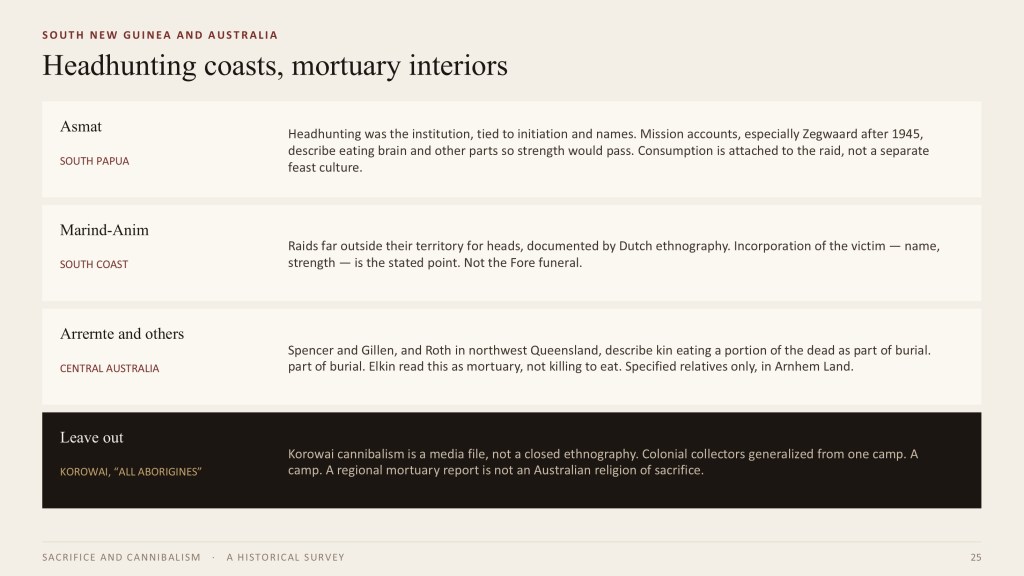
Cannibalism with a stronger file is the Fore of New Guinea, tracked by kuru; Wari’ funerary consumption; Fiji; and Cowboy Wash in Colorado. Later slides add Māori, Marquesas, Malekula, the Cook Islands, Asmat, and Marind-Anim as warfare or headhunting files, and regional Aboriginal Australian mortuary reports. Korowai stories and any claim about “all Aboriginal people” are left out.
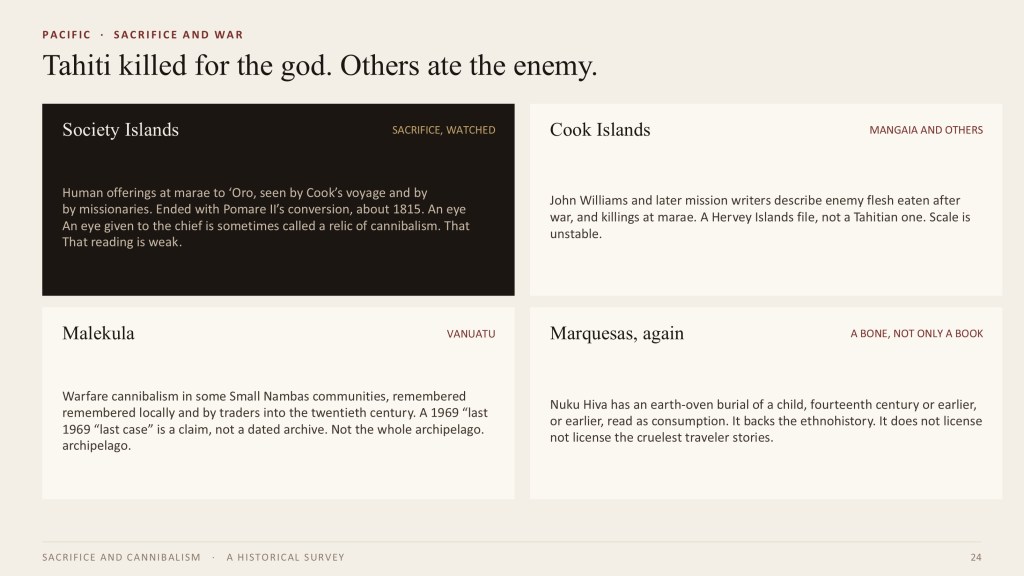
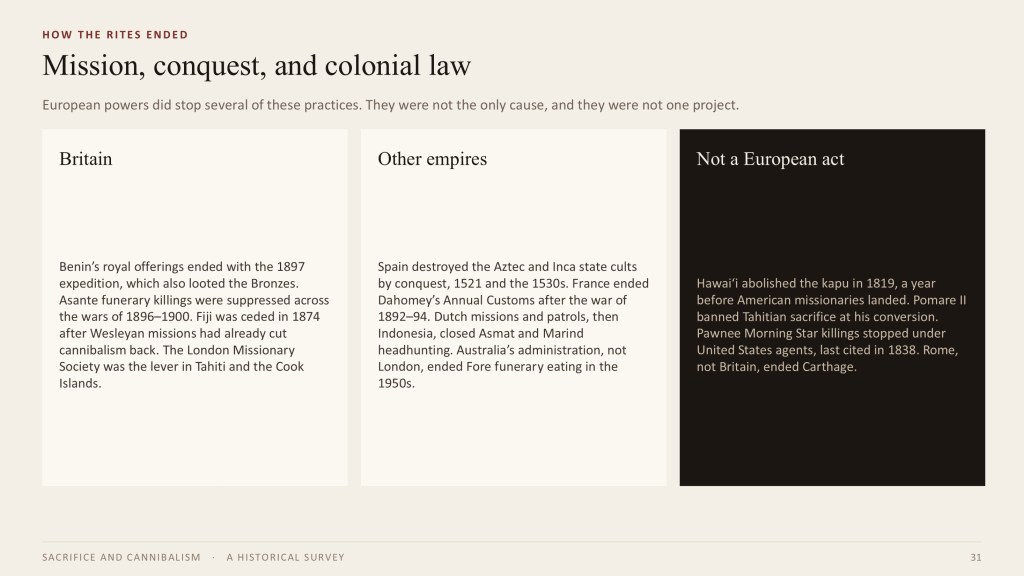
The ending slide says European powers did stop several of these rites, by mission, conquest, or colonial law: Britain in Benin, Asante, and Fiji; Spain in Mexico and the Andes; France in Dahomey; Dutch and then Indonesian rule on the Asmat coast; Australia among the Fore. It also records the counterexamples. Hawaiʻi abolished the kapu in 1819, before missionaries arrived. Pomare II banned Tahitian sacrifice himself. The Pawnee rite ended under United States agents. Rome, not Britain, ended Carthage.
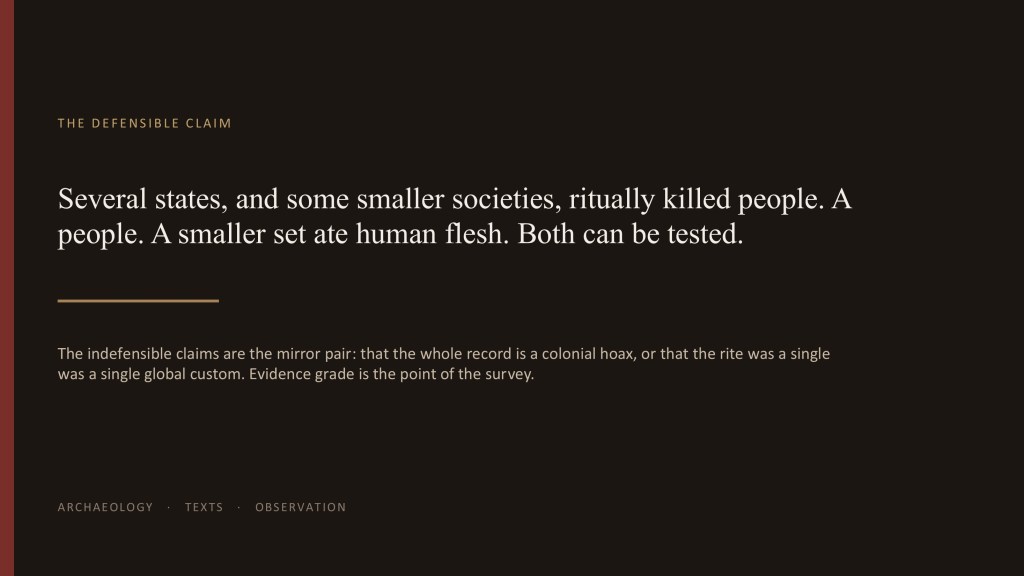
The close is that several states ritually killed people, a smaller set ate human flesh, and both the “it was all a hoax” and “everyone did it” versions fail the evidence.